
Strawberry pollination: how bees and bumblebees give you well-shaped fruit
How strawberry flowers are pollinated, why poor pollination gives small or misshapen fruit, and how to keep bees or bumblebees working in tunnels and greenhouses.
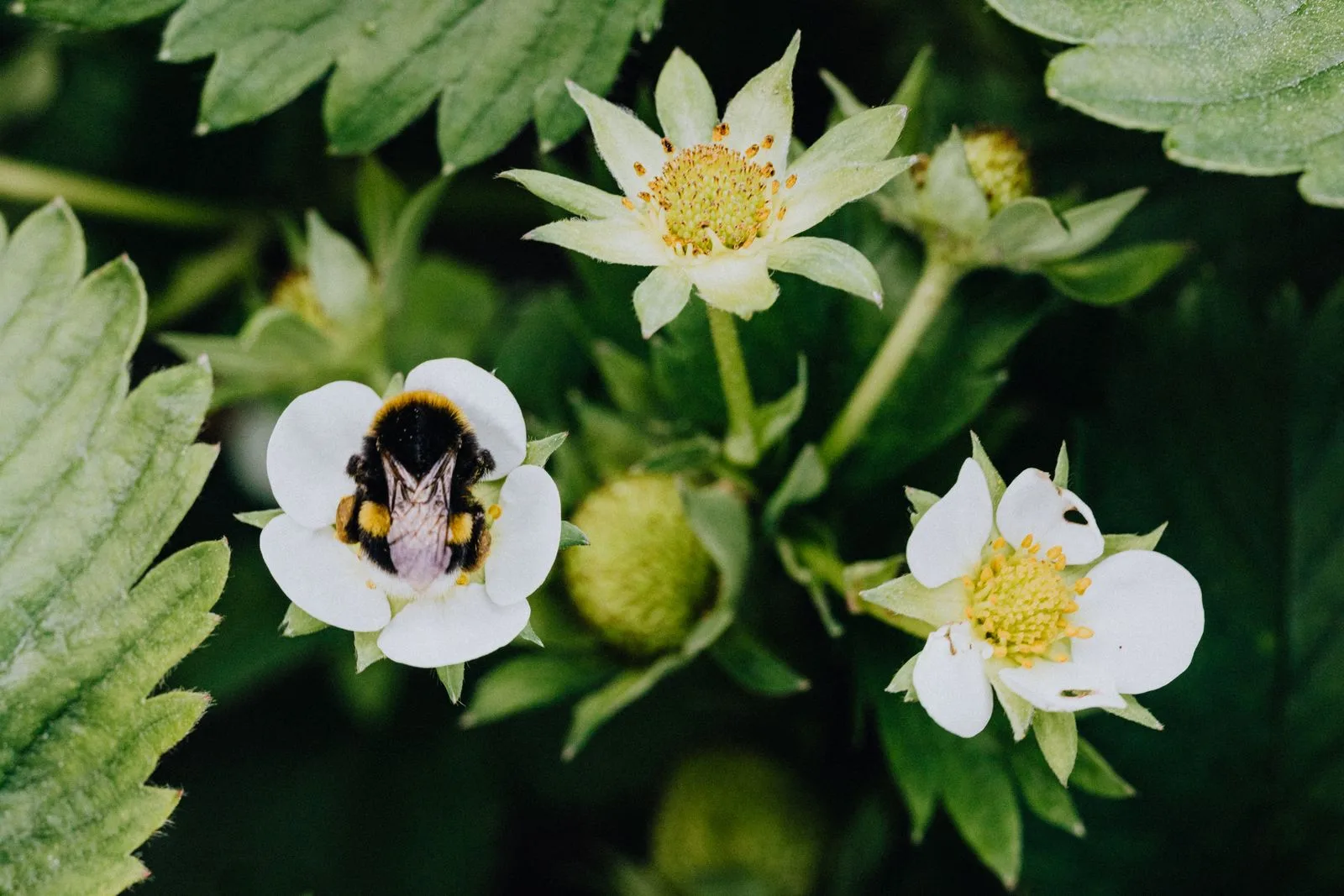
A strawberry is not one fruit in the botanical sense. The red flesh is a swollen flower base, and the small seeds on the outside, the achenes, are the real fruits. Each achene comes from a separate pistil, and each one needs to be pollinated. Fertilised achenes make the flesh around them grow. Where achenes stay unfertilised, the flesh stays small.
That is why pollination shows so directly in the shape of a strawberry. A well-pollinated flower gives a full, even fruit. A flower that got only part of the pollen it needed gives a fruit that is small, lopsided or has a hard, seedy tip.
Does a strawberry need bees?
Most modern strawberry varieties can pollinate themselves to some degree. Wind and the movement of the plant move some pollen around. Under glass and in polytunnels, though, there is little wind, and self-pollination alone often leaves part of the achenes unfertilised. Insect visits spread pollen over the whole flower and between flowers. Growers and researchers generally find that good insect pollination gives heavier, better-shaped fruit and a higher share of first-class strawberries.
Which pollinators are used
- Honeybees are widely used in strawberry tunnels. A hive has many foragers and covers a large area, but honeybees prefer warmth and good light, and they can leave a tunnel for more attractive flowers outside.
- Bumblebees keep flying at lower temperatures and in duller light. That makes them useful early and late in the season and in greenhouses. They are bought as ready-to-use colonies from commercial breeders.
- Solitary bees, such as mason bees, and in some cases reared flies are used as well, often alongside honeybees or bumblebees.
Read more in bees for pollination and honeybees or bumblebees in the greenhouse?
Signs of poor pollination in strawberries
- Misshapen fruit, with a dented or narrow side, or an unfilled tip.
- Small fruit across a section, while the plants look healthy.
- Uneven results between tunnels, or between the ends and the middle of a tunnel.
Poor pollination is not the only cause. Frost or heat damage to the flowers, pests such as capsid bugs, nutrition and variety can also give misshapen fruit. Knowing whether pollinators were actually active when flowering peaked helps you rule pollination in or out.
Keeping strawberry pollination on track
- Bring in colonies on time, just before the first flowers open, so they are settled when flowering starts.
- Spread the hives so that every part of the tunnel or greenhouse is within easy reach. See how many hives per hectare, and where to place them.
- Watch the climate. Heat at the hive, cold mornings and long periods with closed screens or covers reduce flight.
- Check crop protection with your supplier before you spray, and close or move hives when that is required.
- Watch for competition. Honeybees will happily fly to oilseed rape or fruit trees nearby if your crop is less attractive.
A quiet hive can mean an old colony or poor conditions. Why bumblebees stop flying in the greenhouse covers the usual causes.
Measuring instead of guessing
Fruit shape tells you how pollination went, but only weeks later. HiveWatcher shows it while it happens. The HiveNode at each hive measures flight activity and the conditions at the entrance, and the BeeNode in the crop counts flower visits. In the portal you see per tunnel or section where visits fall behind, so you can act while the flowers are still open.
Read more about strawberry pollination and soft fruit, or ask about our pilots.
Read more about pollination monitoring with HiveWatcher.