
Tomatoes
Tomato pollination in the greenhouse, measured every day
Greenhouse tomatoes are pollinated by bumblebees. Whether they do their job, you usually find out from bite marks, or from fruit set weeks later. HiveWatcher shows it every day, per section.
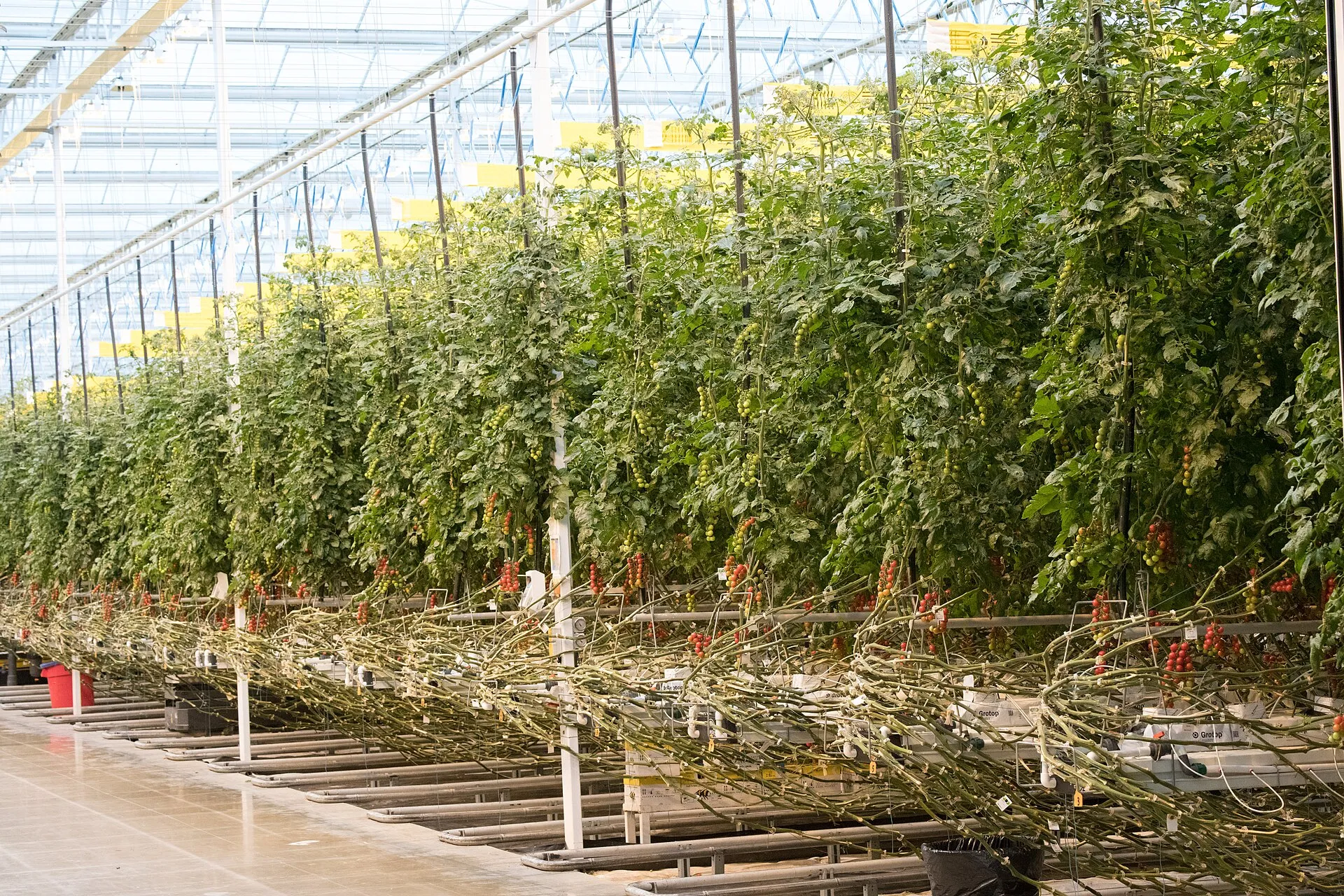
Bumblebees and tomatoes
Tomato flowers release their pollen when a bumblebee vibrates them. That buzz pollination leaves brown bite marks on the flower, which is why growers check the marks to see whether pollination is taking place.
Bite marks only tell you part of the story. Checking them takes time, it is rarely recorded, and you see the result afterwards. Too few visits means poor fruit set; too many can damage the flowers. More in what bite marks tell you, and what they don't.
What HiveWatcher measures in tomatoes
- At every hive: flights in and out and the sound of the colony, so you see when a colony is fading and needs replacing.
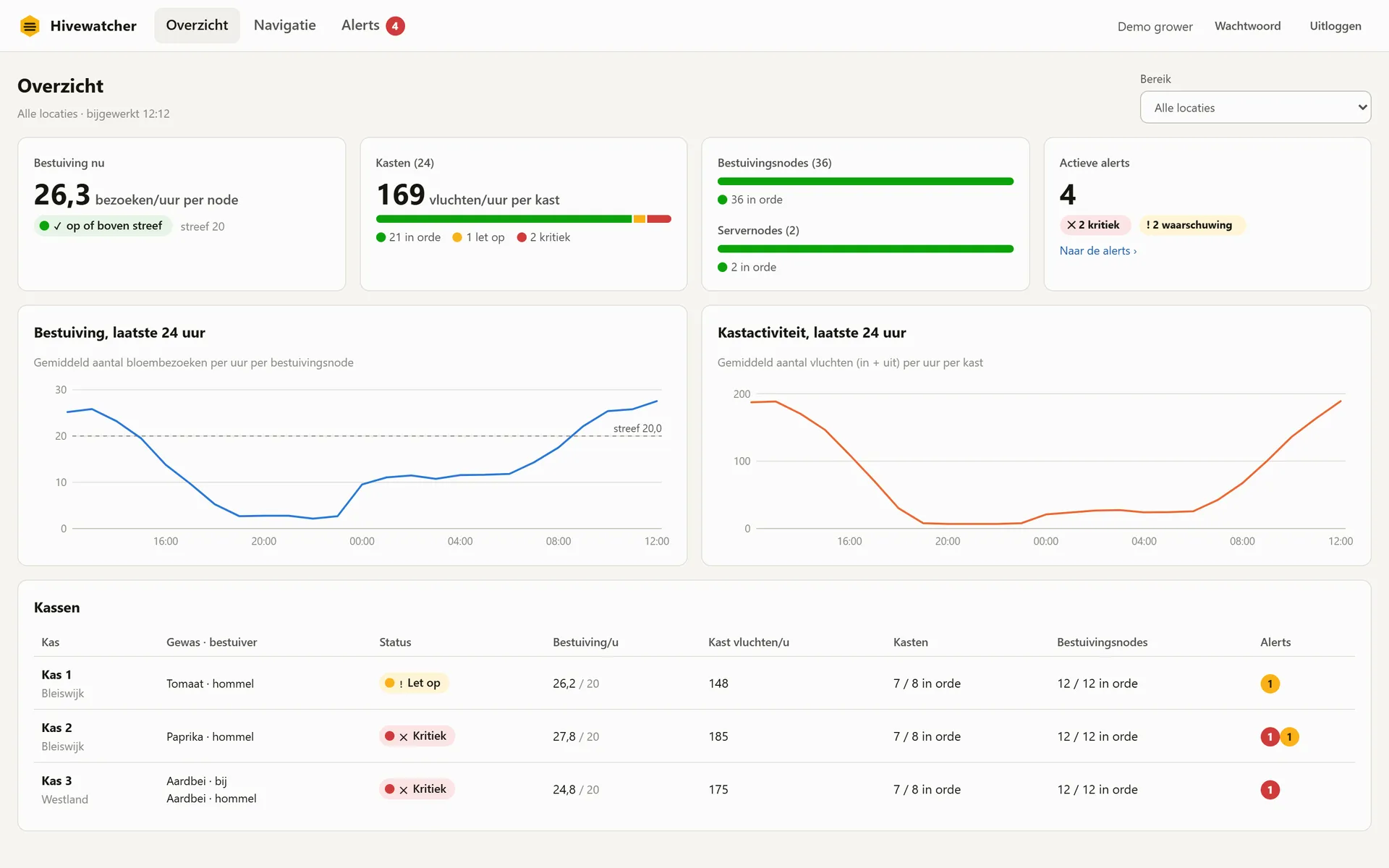
- In the crop: the BeeNode counts flower visits per section, so you see where pollination falls short.
- Climate and light: temperature, humidity and light at the hive entrance, including under LED lighting in winter.
From measurement to action
You see which hives to replace, where extra hives help, and which conditions keep the bumblebees inside. Without walking every row to count bite marks. See how HiveWatcher works.
Example: a pilot in a tomato section
Choose the section
Together we pick a section that represents your greenhouse, ideally one where you sometimes doubt the pollination.
Install in half a day
HiveNodes on about four bumblebee hives, two to three BeeNodes in the crop at truss height and one central receiver with power and wifi or a network cable. We set everything up on site with the app.
Measure every day
In HiveWatcher you see flights per hive and flower visits per BeeNode, next to temperature and light, with an email alert when activity drops.
Compare with the bite marks
Every week we put the measurements next to your own bite mark checks and hive replacements.
Evaluate together
After six to eight weeks and at the end we look at the results together and decide whether more sections are worth measuring.
Measure pollination in your tomato greenhouse
We are looking for growers who want to measure pollination together with us.