 HiveWatcherby
 BeeSensing
Pollination and hive monitoring for greenhouses
Today you check pollination by hand, or by looking at bite marks on the flowers. That takes time, is rarely recorded and only tells you afterwards. HiveWatcher is a pollination monitoring system that measures it continuously, at the hive and on the flower.
Three types of sensors
The HiveNode hangs at the hive. It counts flights in and out, listens to the colony inside the hive and measures light and climate at the entrance. It works with bee and bumblebee hives from any supplier.
The BeeNode is the pollination sensor in the crop. Its camera sees flight movements and landings on flowers, so it counts flower visits: the actual pollination. Images are processed on the BeeNode itself; no images leave the greenhouse. In the crop the BeeNode also measures temperature, humidity, CO2, CO and VOC, for example to catch CO from CO2 dosing with flue gas, which harms bumblebees and people.
The central receiver collects all measurements wirelessly and sends them to the HiveWatcher portal.
Built for the greenhouse
- Resistant to high humidity, condensation and crop protection
- Works under full LED lighting
- Wireless range through glass, steel and dense crops
- Configured on site with a phone
What you see in the portal
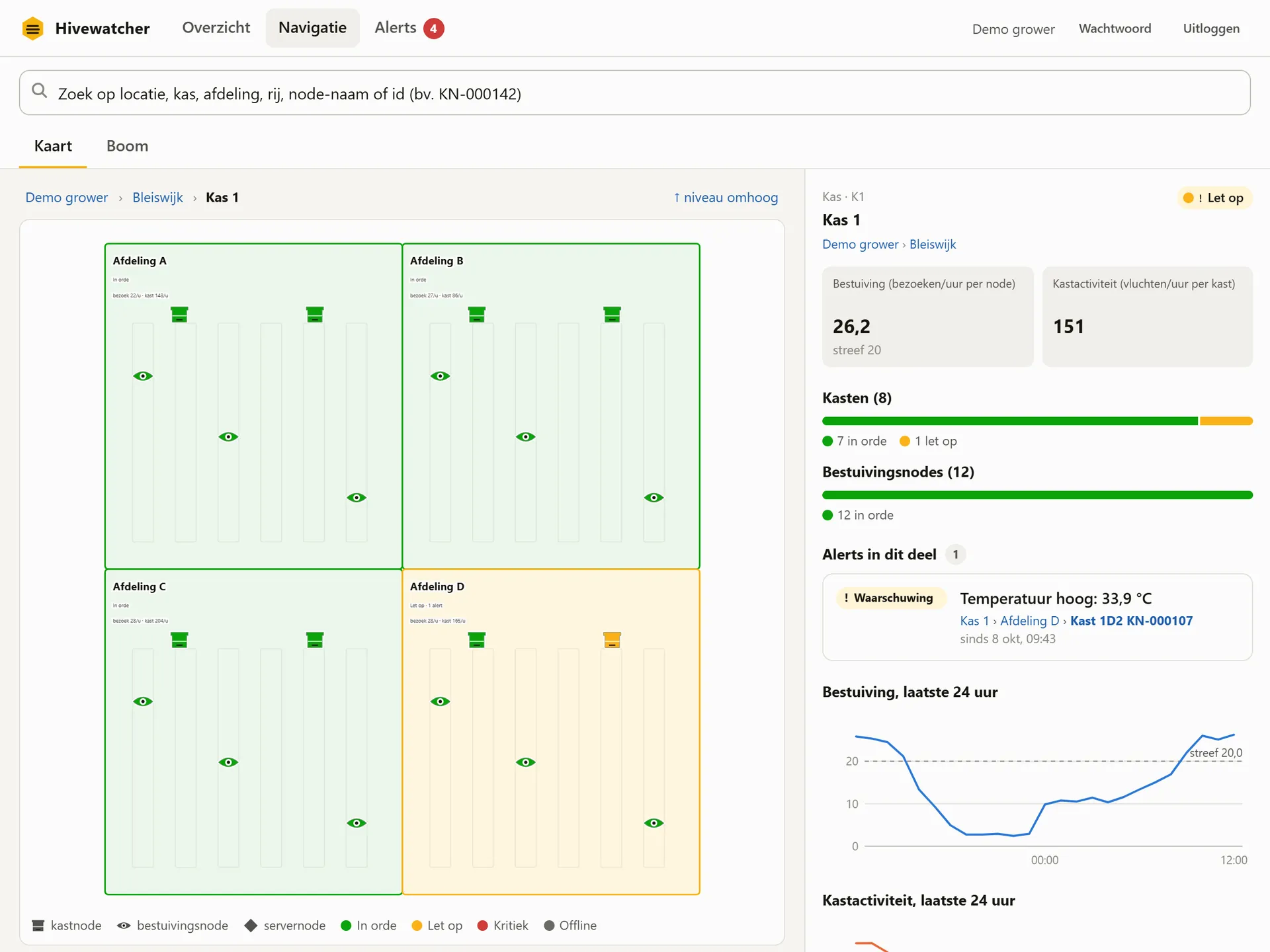
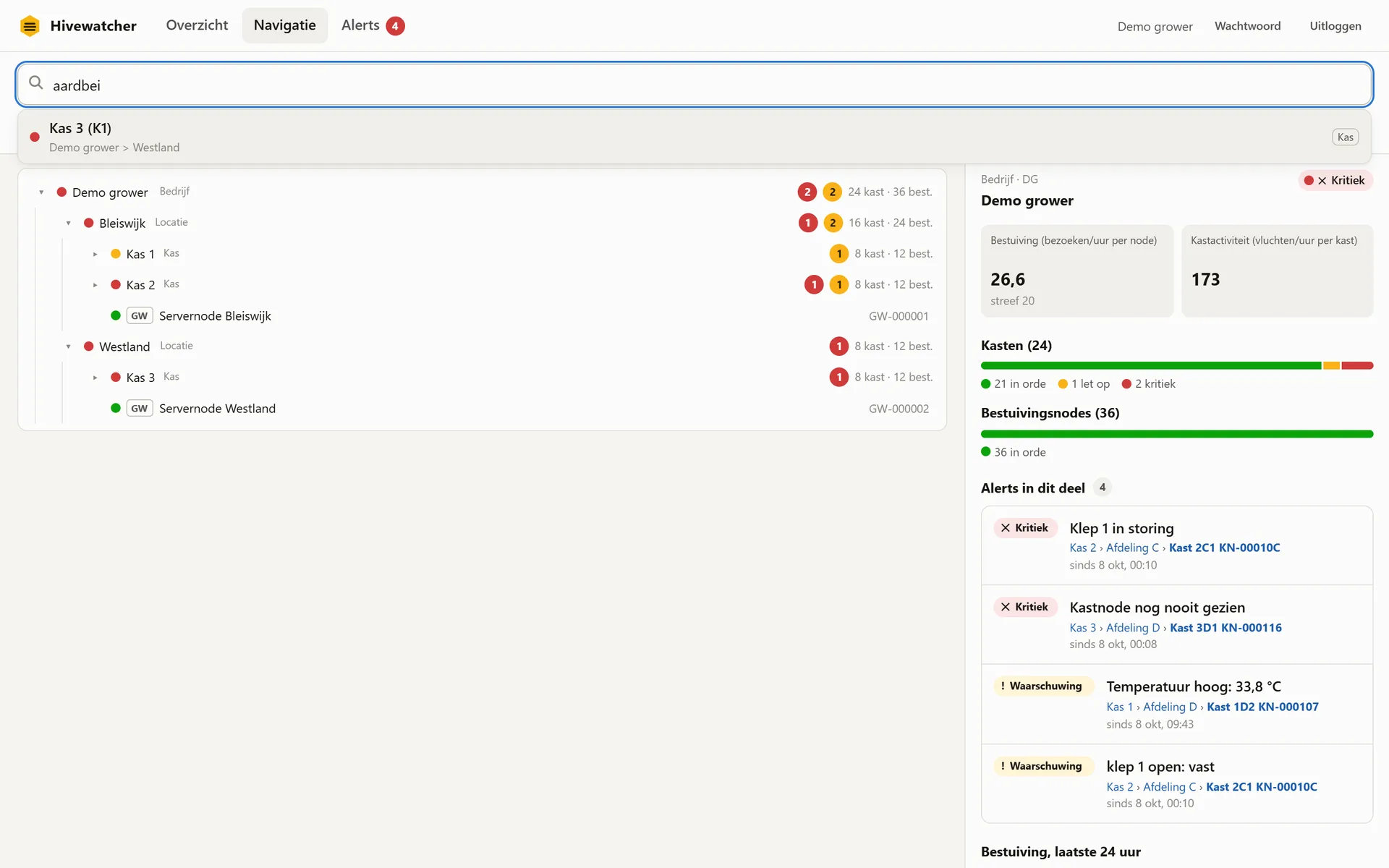
The HiveWatcher portal shows pollination per company, site, greenhouse and section, on a map and in a tree view.
- A bee counter at every hive entrance. The HiveNode counts every flight in and out, per day and per hour, for bee and bumblebee colonies alike. You tell a strong colony from one that is fading without counting by eye.
- Hive activity alerts. When a colony flies less than you would expect for the time of day and the conditions, you get an alert by email or text message. You choose which alerts you receive.
- Flower visits per section. Where pollinators actually visit the crop, and where they fall short.
- One pollination data platform. Flight activity and flower visits next to climate, light and screen position, over time. You compare sections and seasons, and have the numbers at hand when you talk to your crop adviser or hive supplier.
HiveWatcher is used in tomatoes, strawberries and soft fruit and fruiting vegetables.
More on hive monitoring for greenhouses and our guide to improving pollination in the greenhouse.
The app
The app lets you manage the sensors from your phone, tablet or laptop in the greenhouse. Connect to a unit, check its status and configure it. The app will be in the app stores soon.
Frequently asked questions about HiveWatcher
How do you measure pollination?
In two places. At the hive, the HiveNode counts flights in and out of every bee or bumblebee colony. In the crop, the BeeNode counts flower visits. Together they show whether pollinators are active and whether they reach the flowers.
What does the pollination sensor in the crop count?
The BeeNode is a camera with its own image recognition. It sees pollinators approach and land on flowers, and counts those flower visits per section. Images are processed on the BeeNode itself; only the counts are sent.
How does bumblebee hive monitoring work?
The HiveNode is a smart hive sensor for the greenhouse. It sits at the entrance of bee or bumblebee hives from any supplier, counts colony activity in both directions and measures temperature, humidity and light at the entrance.
Do I get an alert when hive activity drops?
Yes. You choose which alerts you receive, by email or text message, for example when the flights of a colony fall well below the days before.
What does the pollination data platform show?
The HiveWatcher portal tracks pollination over time per company, site, greenhouse and section: activity per hive, flower visits, climate and light, on a map and in a tree view.
Does HiveWatcher measure fruit set?
Not directly. It measures what fruit set depends on: colony activity and flower visits. Many growers put that next to their own fruit set and bite mark checks. See pollination monitoring vs manual counting.
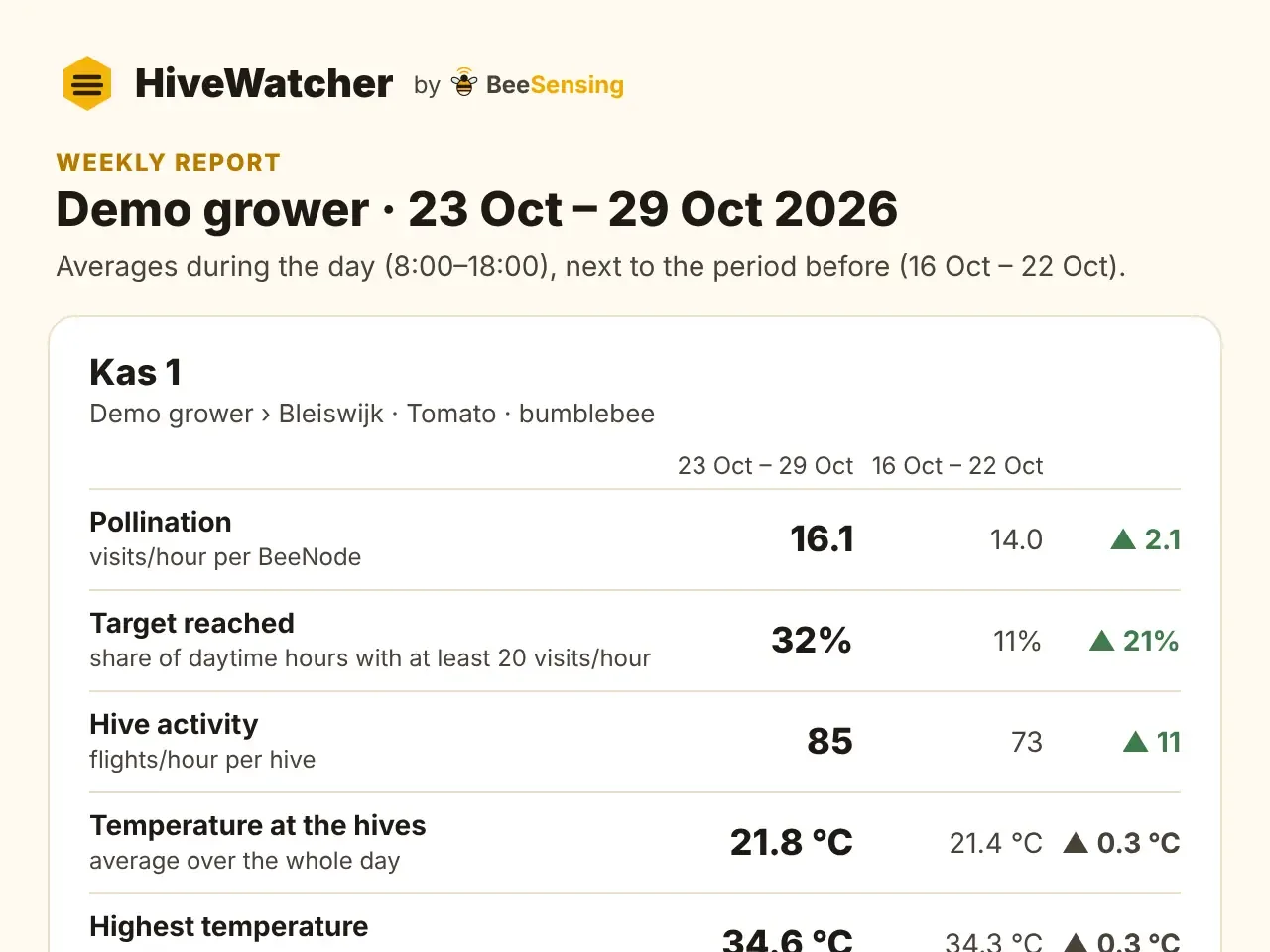
Weekly report
Every Monday in your mailbox
HiveWatcher emails you a report for each greenhouse every week: pollination against the target, hive activity, temperature and alerts, next to the week before. You see at a glance where pollination is improving and where you need to act. Everyone on your team switches it on for themselves, in their own language.