Activity per colony
The HiveNode counts flights in and out of every bee or bumblebee hive, so you see a colony fading before fruit set suffers.
Strawberries
Misshapen berries are often a sign of poor pollination, and you only see them weeks later. HiveWatcher shows every day whether your bee or bumblebee colonies are flying and whether they reach the flowers.
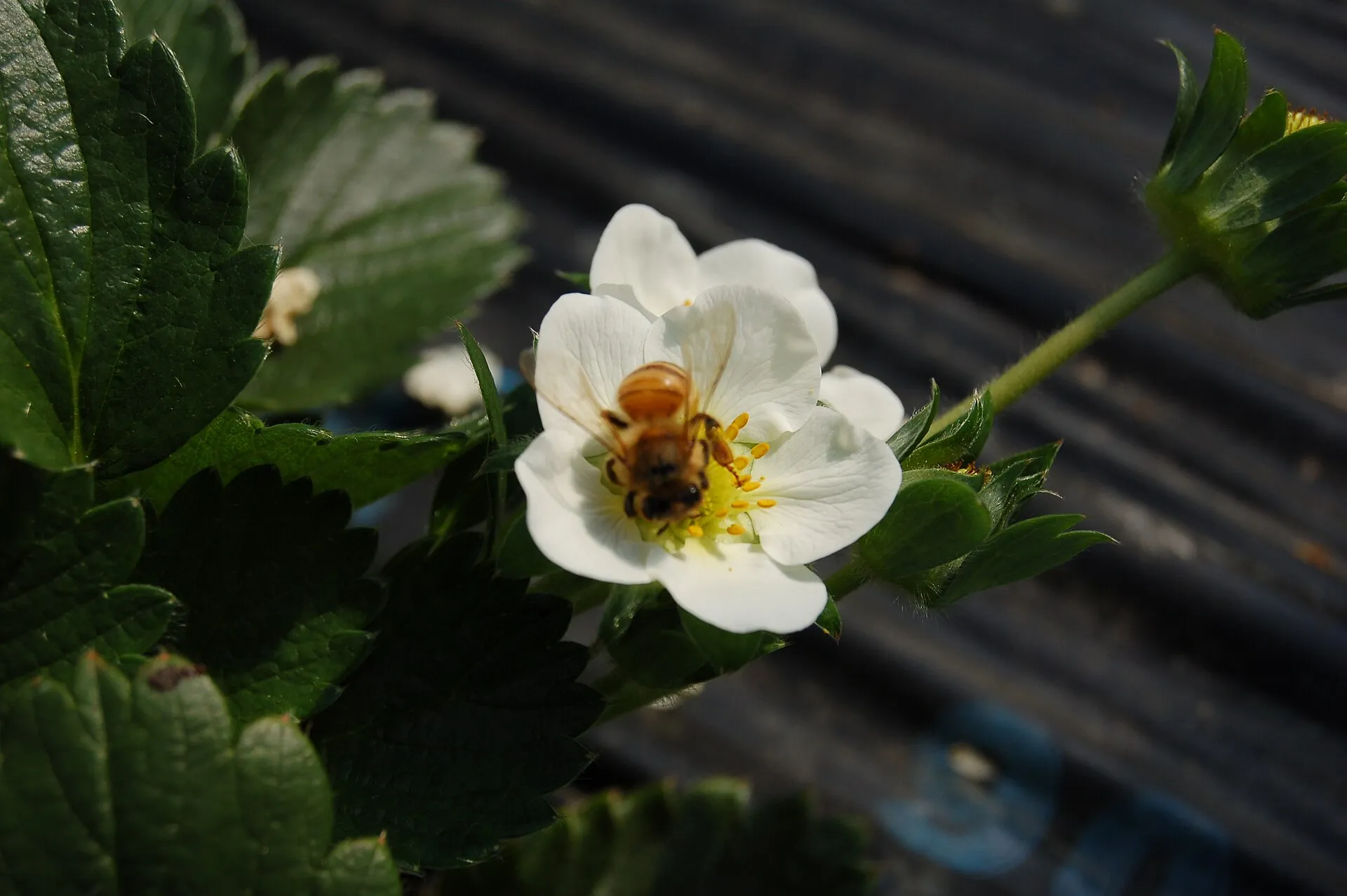
A strawberry is made up of dozens of small seeds on the surface, and every seed needs its own pollen. If part of the flower is not pollinated, that part of the berry stays small and the fruit grows misshapen. That costs class I fruit and weight.
Under glass and in polytunnels, pollination depends on the colonies you bring in. Growers use honeybees, bumblebees or both. Honeybees fly less in cool, dull weather and can leave the tunnel; bumblebees keep flying at lower temperatures but cost more per hive. Read more in honeybees or bumblebees in the greenhouse?
With everbearers and staggered plantings you pollinate for months. Colonies age, flight activity drops and hives need replacing at the right time. A calendar does not tell you how each hive is doing; a measurement does. See is my bumblebee hive still active?
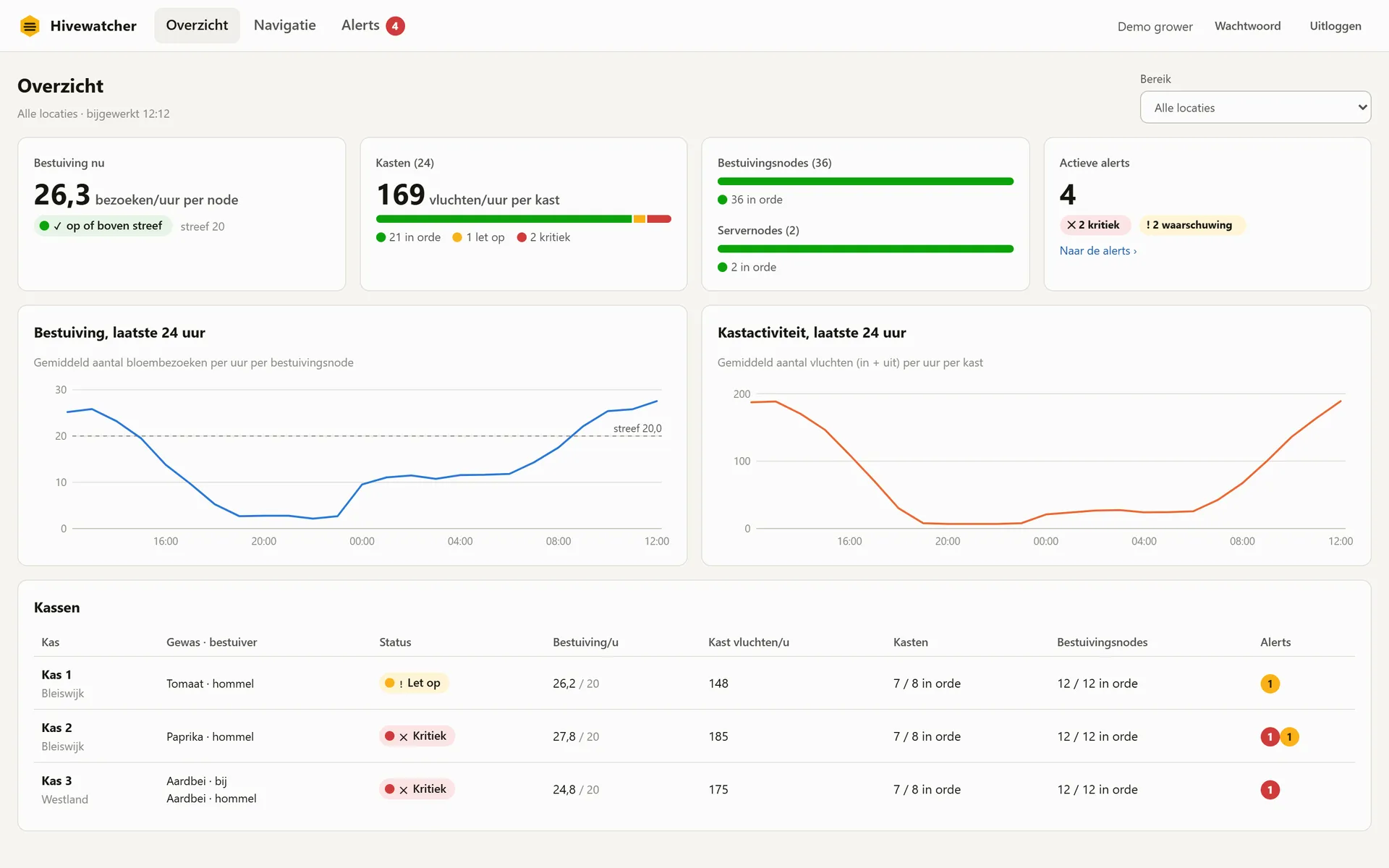
Sensors at the hive and in the crop, with the results per tunnel or section in the HiveWatcher portal.
The HiveNode counts flights in and out of every bee or bumblebee hive, so you see a colony fading before fruit set suffers.
The BeeNode hangs at flower height above the gutter or bed and counts the visits that actually pollinate.
Temperature, humidity and light at the hive entrance explain the quiet days: too cold, too hot or too dull to fly.
You get a message when activity at a hive or in a section drops, so you can act the same week.
Together we pick a tunnel or glasshouse section that represents your farm, ideally one where pollination is sometimes a question mark.
HiveNodes on about four hives, two to three BeeNodes in the crop at flower height and one central receiver with power and wifi or a network cable. We set everything up on site with the app.
In HiveWatcher you follow flights per hive and flower visits per BeeNode every day, next to temperature and light.
We put the measurements next to your own picture of the crop: misshapen fruit, class I share and hive replacements.
After six to eight weeks and at the end we sit down together: what did the data show, and is it worth measuring on more tunnels?
Does it work with honeybees as well as bumblebees?
Yes. The HiveNode works with bee and bumblebee hives from any supplier.
Does it work in polytunnels?
Yes. The sensors are built for high humidity and condensation, and send their data wirelessly to the central receiver at the edge of the field.
Which soft fruit besides strawberries?
Raspberries, blueberries and other fruit under cover. See strawberries and soft fruit.
The first pilots start in December. Tell us about your farm and we will see together what a pilot looks like for you.