
Honeybees or bumblebees in the greenhouse?
Honeybees or bumblebees in the greenhouse or strawberry tunnel? Which crops use which, and the practical pros and cons of each.
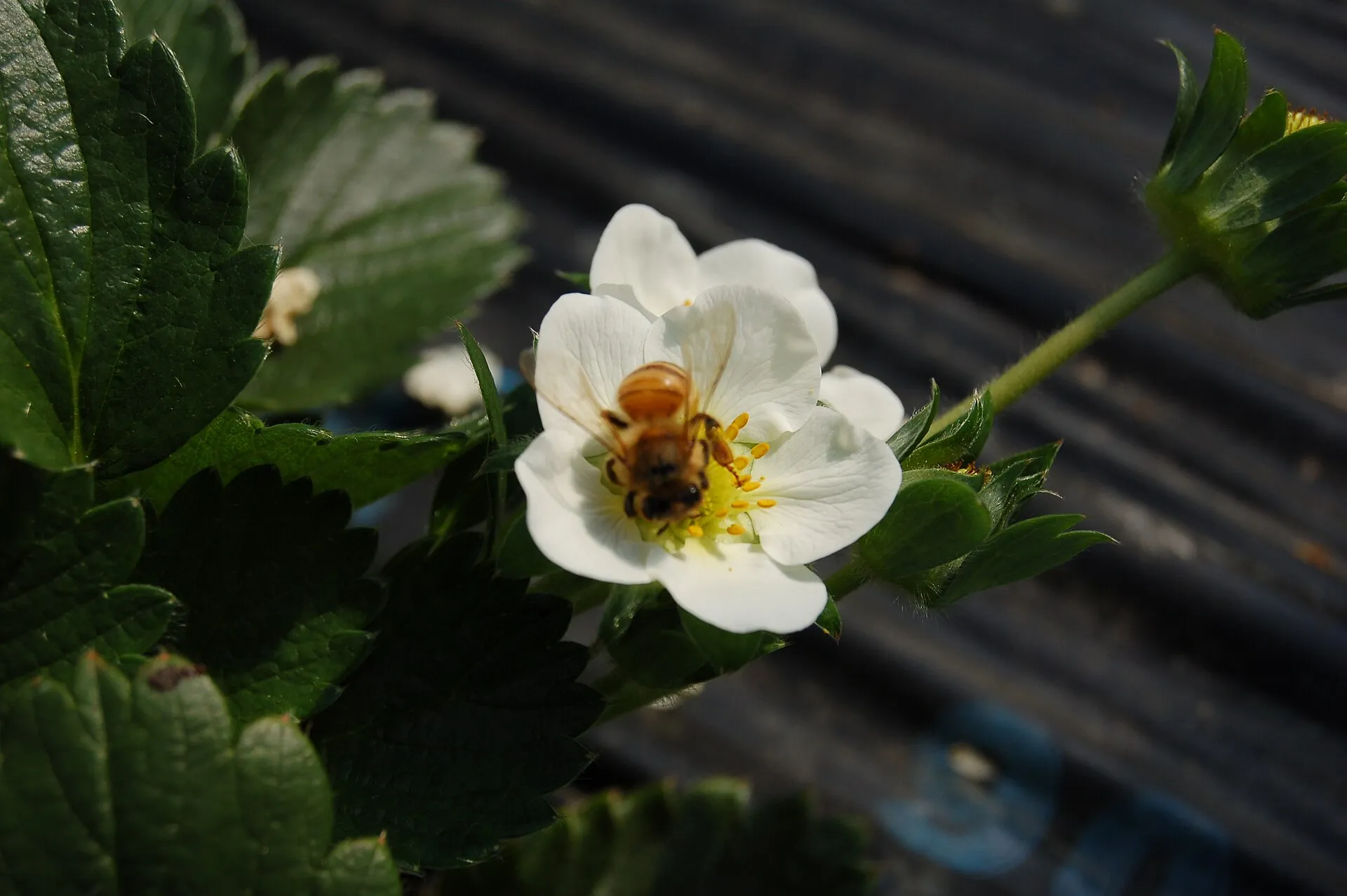
Both honeybees and bumblebees are used for pollination in protected crops. They are different animals, with different strengths. Which one suits you depends mostly on the crop, and partly on the greenhouse and the season.
Which crops typically use which
- Tomato. Bumblebees. Tomato flowers need buzz pollination: the bee vibrates to shake pollen from the anther cone. Bumblebees do this. Honeybees do not, so they are not used for tomatoes.
- Sweet pepper and aubergine. Bumblebees are commonly used.
- Strawberries and other soft fruit. Honeybees, bumblebees or both. In strawberry tunnels and greenhouses, good pollination helps produce well-shaped fruit, and both species can do the job.
- Melon, courgette and other cucurbits. Often honeybees and/or bumblebees, depending on the crop, the setting and local practice.
Your supplier can advise on the best choice for your crop and situation.
Bumblebees: pros and cons
Pros
- They buzz pollinate, which is essential for tomatoes.
- They fly at lower temperatures and in duller conditions than honeybees.
- They cope better with orientation under glass and plastic.
- Colonies are small and supplied ready to use, and are easy to place and move.
Cons
- Colonies have a limited working life and need replacing.
- Too many visits can damage flowers.
- High temperatures reduce activity.
Honeybees: pros and cons
Pros
- Colonies are large, with many foragers.
- They work well in many soft fruit and cucurbit crops.
- They are well suited to crops with many open flowers at the same time.
Cons
- They cannot buzz pollinate.
- They rely heavily on the sun for orientation. Under glass or plastic that filters light, they can become disoriented, fly against the roof or walls and lose their way.
- They prefer warmer conditions and fly less when it is cool or dull.
- They may fly out through open vents or tunnel sides to forage on other flowers outside.
- Hives are larger and need more handling, and beekeeping knowledge helps.
Bees in strawberry tunnels
Strawberry tunnels sit between field and greenhouse. They are often more open, with larger temperature swings than a glasshouse. Honeybees are widely used here, sometimes alongside bumblebees, which can keep working in cooler, duller weather. Placement matters: hives should be sheltered from heat and wind and give bees easy access to the crop. Poorly pollinated strawberries tend to be small or misshapen, so it pays to check that all parts of the tunnel are covered.
How measuring helps
Whichever pollinator you use, the question is the same: are the flowers getting visited, everywhere and every day? HiveWatcher works with bee and bumblebee colonies. The HiveNode at the hive counts flights in and out and records conditions at the entrance, and the BeeNode in the crop records actual landings on flowers. That shows how your choice of pollinator performs in your own greenhouse, per section.
BeeSensing is currently running pilots with growers. Get in touch if you would like to take part.
Read more about pollination in strawberries and soft fruit.
Also read: bees for pollination and strawberry pollination.
Read more about bumblebee hive monitoring with HiveWatcher.