
Pollination glossary: terms every grower should know
Short explanations of pollination terms such as buzz pollination, anther cone, bite marks, pollen viability, fruit set and flight activity.
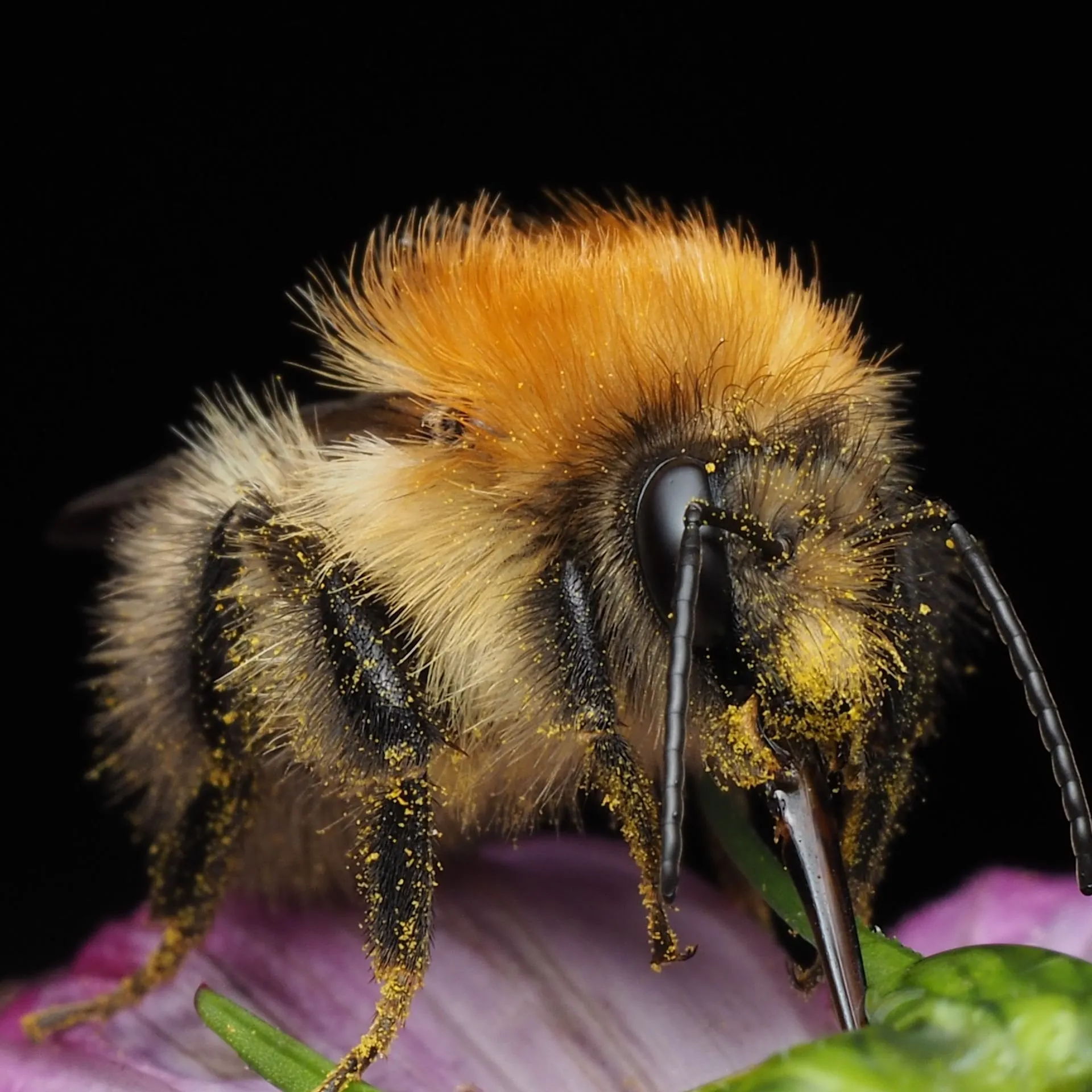
Pollination has its own vocabulary. This glossary explains the terms you come across in our articles and in conversations with suppliers and advisers. Each explanation is short and practical.
The flower
- Anther. The male part of the flower that produces pollen. In many crops the anthers open by themselves. In others, such as tomato and blueberry, the pollen has to be shaken out.
- Anther cone. In tomato, the anthers are joined into a yellow cone around the style. The pollen is released inside the cone, so vibration is needed to get it out.
- Pistil. The female part of the flower: stigma, style and ovary together. A tomato flower has one pistil, a raspberry flower has many.
- Stigma. The tip of the pistil that receives the pollen. It has to be receptive, which depends among other things on temperature and humidity.
- Style. The stalk between the stigma and the ovary. After pollination, the pollen tube grows through the style to the ovules.
- Pollen. The fine grains that carry the male genetic material. Bees and bumblebees also collect pollen as protein food for their brood.
- Pollen viability. The ability of pollen to germinate on the stigma and fertilise the ovule. It drops with heat, cold, plant stress and the age of the pollen.
Pollination and fruit
- Pollination. The transfer of pollen from the anther to the stigma. It is the step before fertilisation.
- Self-pollination. Pollination with pollen from the same flower or variety. Tomato is self-pollinating, but still needs vibration to release the pollen.
- Cross-pollination. Pollination with pollen from another plant or variety. Many blueberry varieties set fruit better with cross-pollination.
- Fruit set. The share of flowers that develop into fruit. Poor fruit set is often the first visible sign of poor pollination, but it only shows weeks later.
- Drupelet. One of the small fleshy segments of a raspberry or blackberry. Each drupelet comes from its own pistil and needs its own pollination.
- Achene. The small "seed" on the outside of a strawberry, which is actually a tiny fruit. Where achenes are not pollinated, the flesh around them grows less, which gives misshapen fruit.
Bees and bumblebees
- Buzz pollination (sonication). A bumblebee holds on to the flower and vibrates its flight muscles, which shakes the pollen loose. Honeybees cannot do this.
- Bite marks. Brown marks on the tomato anther cone where a bumblebee held on with its mandibles while buzzing. Growers check them to see whether flowers have been visited. See how to check tomato pollination.
- Colony. The bees or bumblebees that live together in a hive: queen, workers and brood. For pollination, the number of active workers matters most.
- Forager. A worker that flies out to collect pollen or nectar. Only foragers visit the crop.
- Hive entrance. The opening through which bees fly in and out. On many commercial bumblebee hives it can be set to open, closed, or in only.
- Nectar robbing. Taking nectar through a hole in the side or base of the flower, without touching the anthers. The bee gets food, but the flower is not pollinated.
Monitoring and management
- Flight activity. The number of flights in and out of a hive over time. It shows how actively a colony works, but not where the bees go.
- Flower visit. A bee or bumblebee landing on a flower. Visits in the crop show where pollination actually happens.
- Waiting time. The period after a crop protection treatment during which pollinators should be kept away from the treated crop. Check the label and your supplier's side-effects list.
Measured instead of checked by hand
Many of these terms describe things you normally check by hand: bite marks, fruit set, a quick look at the hive entrance. HiveWatcher measures part of this continuously. The HiveNode at each hive counts flights in and out and records climate and light at the entrance. The BeeNode in the crop counts flower visits. In the portal you see both together, per hive and per section.
Read more about how tomatoes are pollinated and crop protection and colonies, or learn more about HiveWatcher.
Read more about pollination monitoring with HiveWatcher.