
Crop protection and bee or bumblebee colonies: how to protect your pollinators
How to combine crop protection with bee or bumblebee colonies: labels, side-effects lists, waiting times, closing or moving hives and timing sprays.
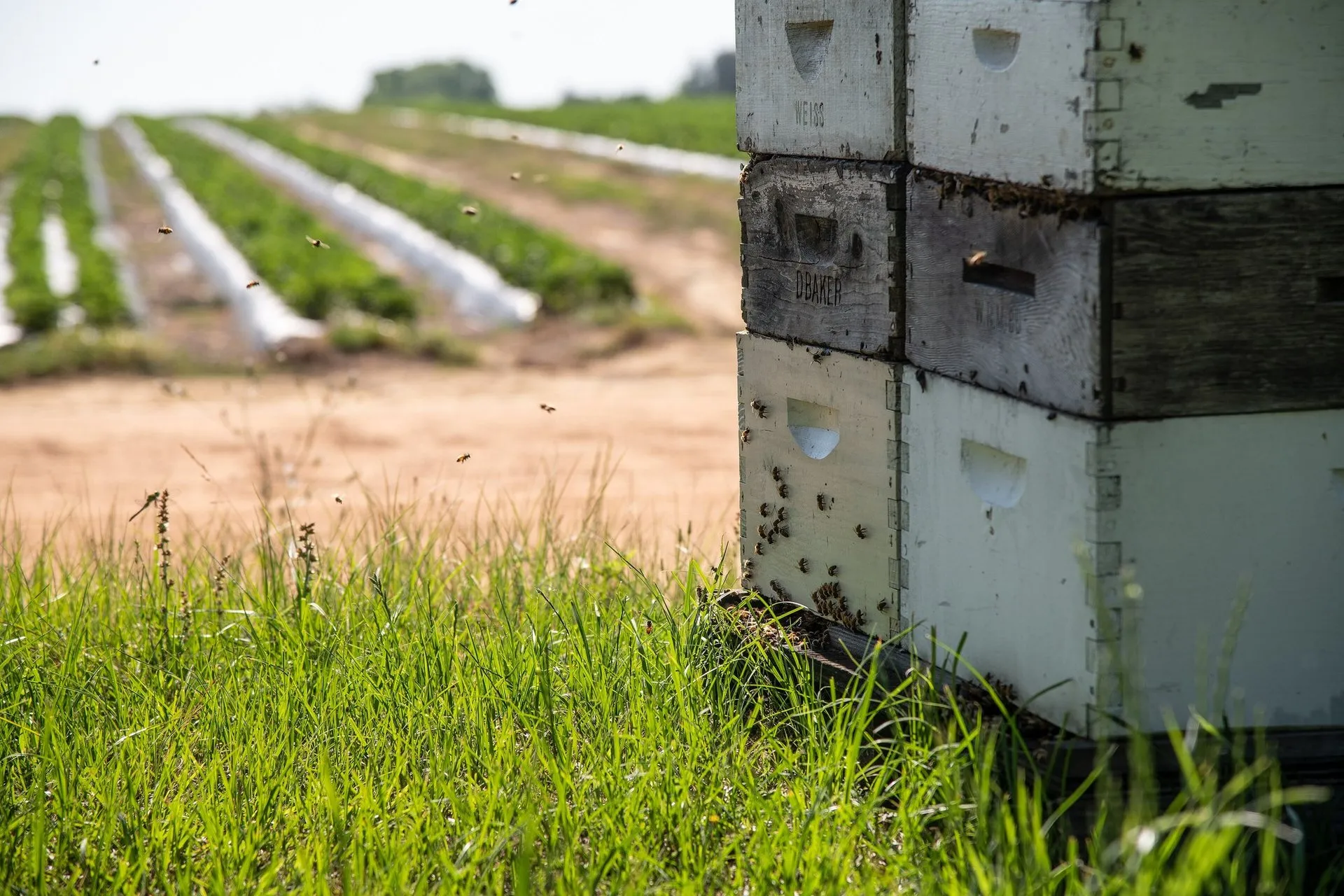
Most greenhouse and tunnel crops need both pollinators and crop protection. The two can go together, but only with planning. One spray at the wrong moment can weaken a colony for weeks, and you may only notice it when fruit set drops.
Start with the label
The product label is the starting point. It states whether a product is harmful to bees and under which conditions you may use it. The label and local regulations are binding, so always follow them first.
Next, check your supplier's side-effects list. Suppliers of bumblebees and biological control agents keep lists that show, per active ingredient, how harmful it is to bumblebees and natural enemies, and how long you should keep the colony away from the treated crop. These lists are updated regularly, so check the current version instead of relying on memory.
Waiting times in general
A waiting time (or re-entry interval) is the period after a treatment during which pollinators should not be exposed to the treated crop. It depends on the product, the dose, the application method and the crop. Some points apply in general:
- Contact effect. Some products mainly harm bees through direct contact with the spray or wet residue. The risk is often lower once the crop is dry, but check the list.
- Residual effect. Other products remain harmful on leaves and flowers for days or longer.
- Systemic products. Products taken up by the plant can end up in pollen and nectar. They can affect the colony over a longer period, also through the food the foragers bring back to the hive.
- Look beyond the active substance. Adjuvants, tank mixes and the formulation can make a treatment more harmful than one product on its own.
- Indirect effects. Some products do not kill bees outright but change their behaviour, for example less foraging or poorer orientation.
Closing or moving hives
- Close in the evening. Many commercial bumblebee hives have an entrance that can be set so bees can return but cannot leave. Set it the evening before, so the foragers come home, and close the hive fully when needed.
- Close remotely with the HiveNode. The HiveNode on the hive has two motorised flaps. From HiveWatcher you close the exit in advance, for one hive or a whole section, while returning bees can still get in. The flaps open again by themselves after the time you set (up to four hours), so no colony stays shut in by accident. For longer waiting times, move the hives or follow your supplier's advice.
- Move the hives. For longer waiting times, move the hives out of the treated section to a quiet, cool and dark place. Put them back in the same spot afterwards, because the foragers remember the location.
- Do not keep them closed too long. A closed colony cannot forage. Make sure it has food and ventilation and does not overheat.
- Honeybees. Honeybee hives are harder to close or move without disturbance. Discuss the plan with your beekeeper in advance.
Timing and application
- Spray when bees are not flying. In the evening or early morning, when most foragers are in the hive, exposure is lower. Bumblebees still fly in low light, so look at the activity, not just the clock.
- Limit drift. Keep spray away from hives and hive entrances, and think about which sections you treat.
- Treat only where needed. Spot treatments in affected areas expose fewer bees than treating the whole greenhouse.
- Tell your supplier. Let your bumblebee supplier or beekeeper know what you plan. They can advise on timing and on how long to keep the colonies away.
- Write it down. Note which product, where and when, so you can link any change in activity to the treatment.
After the treatment
After a treatment, check whether your colonies are back to normal:
- Is flight activity back to the level of the days before?
- Are there dead bees in front of or in the hive?
- In the following weeks, do you see fewer bite marks on tomato flowers or more misshapen strawberries?
By eye alone it is hard to know whether a colony was affected. HiveWatcher shows flight activity per hive before and after the treatment, and the BeeNode in the crop shows per section whether flower visits recover.
Read more about checking whether a bumblebee hive is active and choosing honeybees or bumblebees, or see how HiveWatcher works.
Read more about pollination monitoring with HiveWatcher.