
How to check tomato pollination: what bite marks tell you
How to check pollination in tomatoes using bumblebee bite marks, what the marks can and cannot tell you, and other causes of poor fruit set.
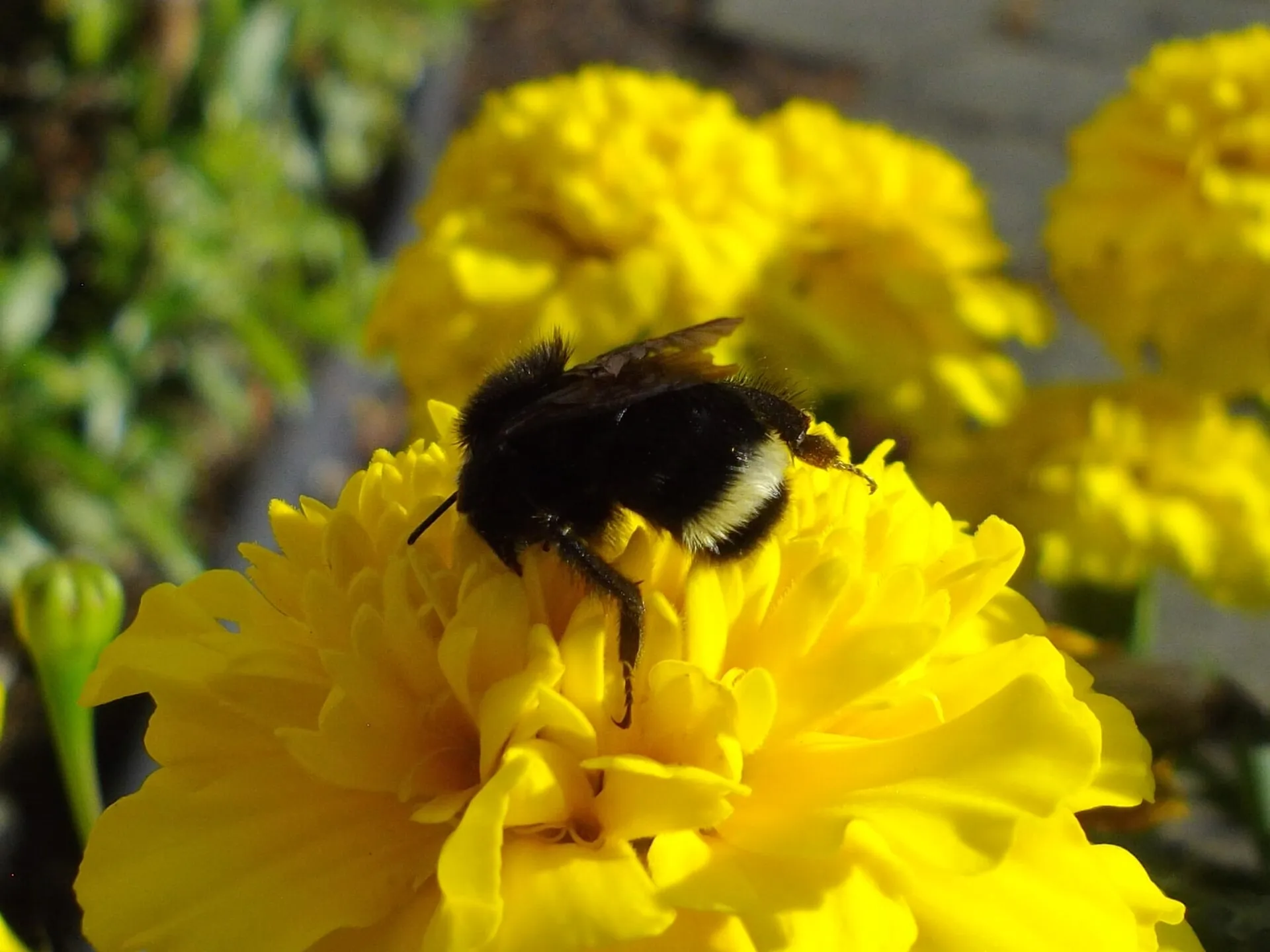
In greenhouse tomatoes, bumblebees do the pollinating. They hold on to the flower and vibrate their flight muscles, shaking pollen loose from the anther cone. This is called buzz pollination. While they do it, they grip the cone with their mandibles, and that leaves a mark.
What bite marks are
A bite mark is a small brown spot or scar on the yellow anther cone. It appears some time after the visit, as the tissue discolours. Growers and crop advisers have used these marks for years as a quick way to check pollination in tomato.
The method is simple. Walk a row, look at flowers that have recently opened, and note which ones have marks. Repeat in different parts of the greenhouse. If most open flowers show marks, bumblebees are visiting. If few do, something is wrong.
What bite marks tell you
- A visit happened. A mark means at least one bumblebee landed and worked the flower.
- Roughly where visits fall short. If you check in several places, you can see whether some sections get fewer visits than others.
- Possible overvisiting. Very dark, heavily damaged cones can mean flowers are being visited too often. Too many visits can damage the flower, which is a reason not to simply add more hives.
What bite marks don't tell you
Bite marks are useful, but they have limits:
- Timing is uncertain. It takes time for a mark to turn brown, so you are looking at visits from earlier, not now.
- Number of visits is hard to judge. One visit and several visits can look similar.
- Effective pollination is not guaranteed. A visit does not always mean enough pollen was released or that it was viable. Climate plays a large role: very high or low temperatures and humidity can affect pollen quality and release.
- It is a sample. You can only check a limited number of flowers. In a large greenhouse, the plants you check may not represent the whole section.
- It takes labour. Doing it properly, regularly and in many places costs time.
Poor fruit set in tomatoes: look wider
If fruit set is poor, pollination is one possible cause, but not the only one. Other common factors include:
- Climate. Temperature, humidity and their swings affect pollen and flower development.
- Light and plant balance. Low light or an unbalanced plant can lead to flower abortion.
- Nutrition and water. Shortages or excesses can affect flowering and set.
- Flower quality. Weak flowers set poorly even when visited.
Bite marks help you separate these. If marks are plentiful but set is still poor, look at climate and the plant. If marks are scarce, look at the hives: are colonies active, are they placed well, and are conditions holding the bees back?
How measuring helps
Bite marks show that a visit happened some time ago, on the flowers you happened to check. HiveWatcher adds a continuous view. The BeeNode stands in the crop and records approaches and landings on flowers as they happen, processing images on the device so nothing leaves the greenhouse. The HiveNode at the hive shows flight activity and conditions at the entrance. In the portal you see visits per greenhouse and section, so you know where to look before fruit set tells you.
BeeSensing is currently running pilots with growers. Get in touch if you would like to take part.
Read more about pollination in tomatoes.
Also read: how are tomatoes pollinated in the greenhouse?
Read more about pollination monitoring with HiveWatcher.