
Heat and humidity: when pollination stops in the greenhouse
How heat, very humid air and very dry air slow down bumblebees and honeybees, reduce pollen quality and lead to poor fruit set in the greenhouse.
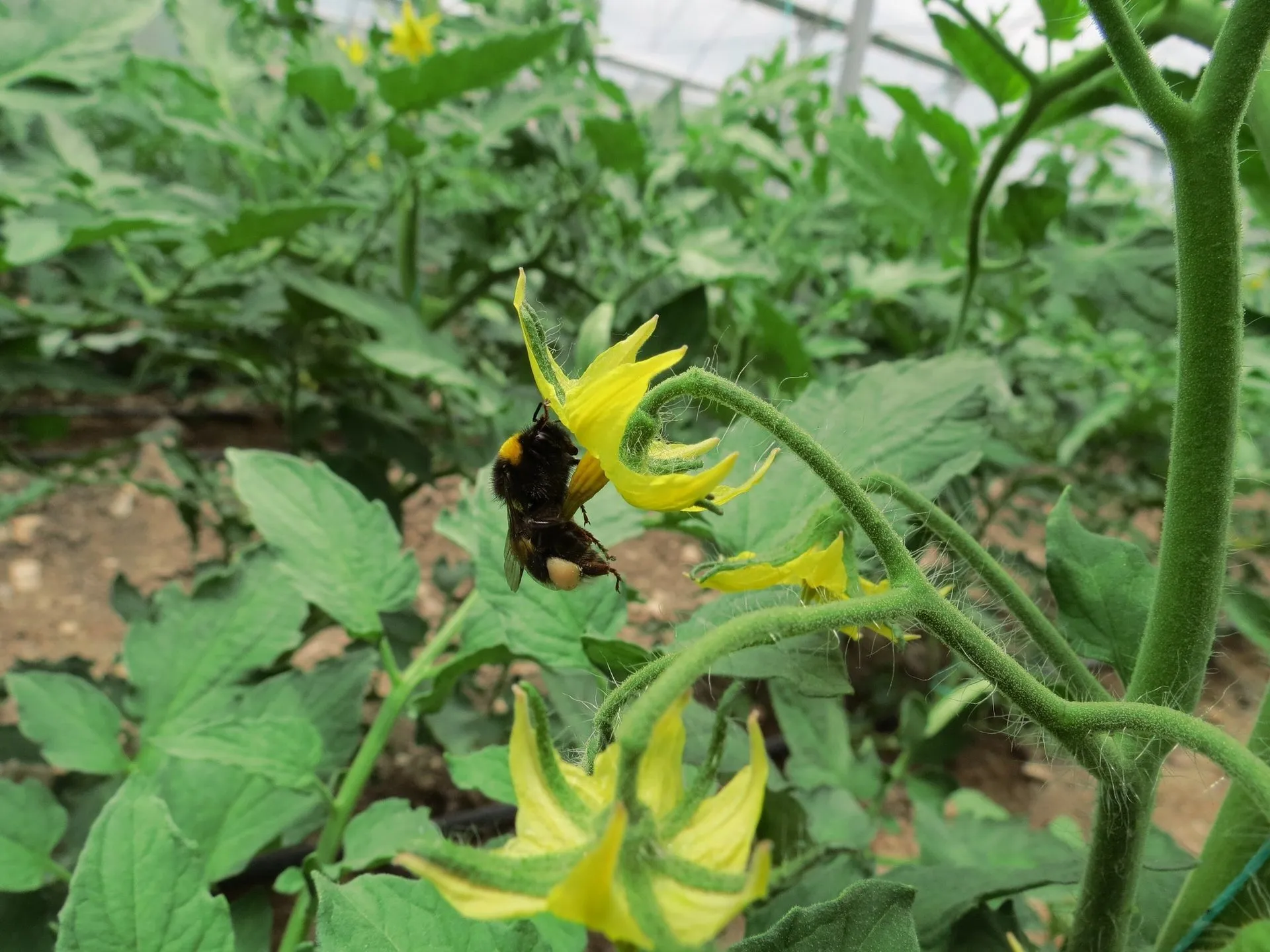
On a bright summer day the greenhouse heats up fast. The crop keeps growing, but pollination can quietly stall. Bumblebees and honeybees fly less, and the pollen in the flowers may not do its job. Because the effect only shows weeks later in fruit set, it is easy to miss.
What heat does to bumblebees and honeybees
Bumblebees are built for cool weather. Their thick coat and their ability to warm up their flight muscles let them fly on cold, dull days. The other side is that they overheat easily. In general, bumblebee activity drops when the greenhouse gets warmer than roughly 30 °C. Instead of foraging, many workers stay in or near the hive and fan their wings to cool the colony.
Honeybees cope with heat somewhat better, but a hot, closed greenhouse is not comfortable for them either. In hot conditions a larger share of the colony collects water and cools the hive instead of visiting flowers.
The hive itself matters too. A hive in direct sun, or close to a warm wall or heating pipe, can get much warmer than the air in the crop. The colony then spends its energy on cooling, and brood development can suffer.
What heat does to the pollen
Even when the bees keep flying, the flower has to produce good pollen. In many crops, including tomato and sweet pepper, prolonged high temperatures reduce the amount of pollen and its viability. Pollen formed during a hot period may germinate poorly on the stigma, even when it gets there. That is why the effect of a heat wave often shows in fruit set some time after the hot days themselves.
Humid air and dry air
Humidity affects pollination in two directions.
- Very humid air. Pollen becomes sticky and clumps together. It does not release well from the anthers, and less of it reaches the stigma. Condensation on the flowers in the early morning has the same effect.
- Very dry air. Pollen and stigma can dry out. The stigma becomes less receptive and pollen loses its viability faster. Dry air often comes together with heat, so the effects add up.
- Big swings. Fast changes between humid nights and hot, dry days put stress on both the crop and the colony.
What you can do
- Screen and ventilate in time. Use screens and vents to keep peaks down during the hottest hours, as far as your growing strategy allows.
- Keep hives in the shade. Keep hives out of direct sun and away from heat sources. A shading board or a spot under the crop canopy helps.
- Watch the timing. On hot days, much of the pollination work happens in the morning. Make sure conditions are good at that time, for example by avoiding very humid air in the early hours.
- Check after hot periods. Look at bite marks or flower visits in the days after a heat wave, and keep an eye on fruit set in the weeks that follow.
Seeing heat stress in the data
On a hot day you cannot stand at every hive. The HiveNode measures temperature and humidity at the hive entrance and counts flights in and out. In the HiveWatcher portal you see at what time activity drops on hot days, next to climate and screen position. That also shows whether extra screening or ventilation helps.
Read more about how tomatoes are pollinated and how to tell whether a bumblebee hive is active, or learn more about HiveWatcher.
Photo: Metin GÜLEŞCİ, Wikimedia Commons, CC BY 4.0
Read more about bumblebee hive monitoring with HiveWatcher.