
Poor fruit set in tomatoes: pollination, climate or plant?
Poor fruit set in greenhouse tomatoes can come from too little pollination, from heat, cold or humidity, or from the plant itself. How to tell the causes apart, and what to check first.
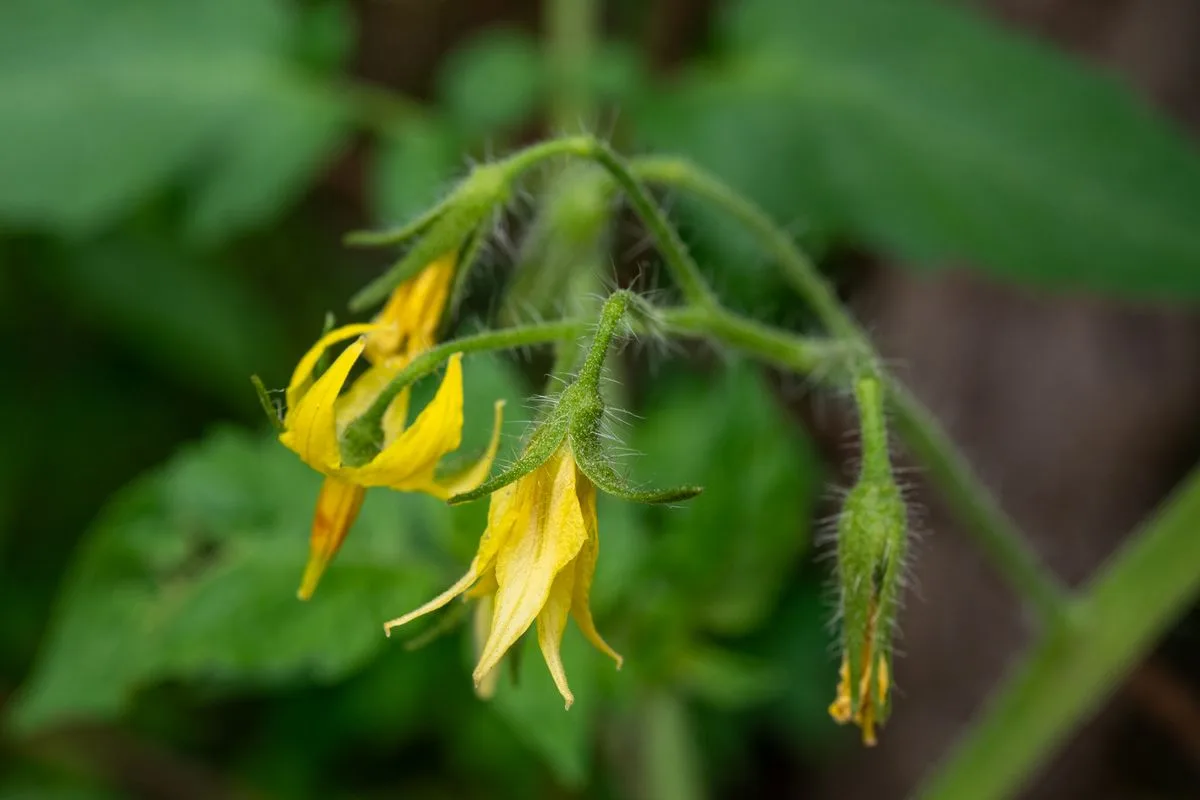
You see trusses with flowers that dropped off, small fruits that stopped growing, or fruits that are misshapen and hollow. Fruit set is poor, but why? In greenhouse tomatoes there are three groups of causes: the flower was not pollinated well, the climate damaged the pollen or the flower, or the plant could not carry the fruit. Each needs a different fix, so it pays to find out which one it is before you act.
How fruit set works in tomatoes
A tomato flower pollinates itself, but the pollen sits locked inside the anthers. It only comes out when the flower vibrates. In a greenhouse, bumblebees do that: they grab the flower and buzz, which shakes the pollen loose. The pollen then has to land on the stigma, germinate and grow down to the ovules. Every step can go wrong, and the result is the same: poor fruit set. Read more about how tomatoes are pollinated in the greenhouse.
Cause 1: too little pollination
If too few flowers are visited, fruit set drops, even when the plant and the climate are fine. Typical signs:
- Few bite marks. A bumblebee leaves brown marks on the cone of the anthers. Few or no marks on open flowers means few visits. See how to check tomato pollination with bite marks.
- Patchy fruit set. Poor rows or corners next to good ones, for example far from the hives, in a hot or dark corner, or behind a screen.
- Small fruits with few seeds. A fruit that was poorly pollinated has fewer seeds and often stays smaller or grows lopsided.
- A weak or old colony. Fewer flights at the hive entrance mean fewer flower visits. See is my bumblebee hive still active?
Cause 2: climate
Even with plenty of visits, fruit set fails when the pollen is not good or cannot reach the stigma.
- Heat. Long periods well above about 30 °C during the day reduce the amount and the viability of the pollen. The damage shows in fruit set some time after the hot days. Bumblebees also fly less in the heat. See heat and humidity in the greenhouse.
- Cold nights. Low night temperatures also give poor pollen and misshapen fruits, especially in winter crops.
- Very humid air. Pollen becomes sticky and does not release from the anthers. Condensation on the flowers in the morning has the same effect.
- Very dry air. The stigma dries out and is less receptive.
- Low light. In dark winter weeks the plant makes fewer sugars, which affects flowers and fruit set. See pollination in winter.
A climate problem usually hits the whole compartment at the same time and follows the weather. Bite marks are present, but fruit set still lags.
Cause 3: the plant itself
- Too much load. A plant with many growing fruits has fewer sugars left for new trusses, and flowers drop.
- Unbalanced growth. A plant that grows too vegetatively, or too generatively, gives weaker flowers.
- Nutrition and root health. Shortages, for example of calcium or boron, and root problems affect flowers and fruit.
- Variety. Some varieties set fruit more easily under heat or low light than others.
Plant causes are best judged together with your crop adviser.
How to tell the causes apart
- Bite marks present, fruit set still poor? Look at climate and plant first.
- Few bite marks? Look at the colonies: activity at the hive, their age and where they stand.
- Patchy problem? Points to pollination or to a local climate difference.
- Everywhere at once, after hot or dark days? Points to climate.
With hive monitoring you see a drop in flights at the hive the same day, instead of afterwards.
In short
Poor fruit set has more than one cause. Check the bite marks, compare good and poor places, and put the timing next to the weather. Then you know whether you need more or better colonies, a different climate setting, or a change in how you steer the crop.
Measure pollination instead of guessing
Bite marks and fruit set only tell you afterwards. HiveWatcher by BeeSensing measures pollination every day: the HiveNode counts the flights of every bee or bumblebee colony, and the BeeNode counts flower visits in the crop, per greenhouse and per section. When pollination falls behind, you get an alert the same day, weeks before it shows in fruit set. See how HiveWatcher works.