
Pollination in winter: short days, artificial light and cold
How short days, LED or HPS lighting and cold outdoor temperatures affect bumblebees and pollination in winter crops such as lit tomatoes.
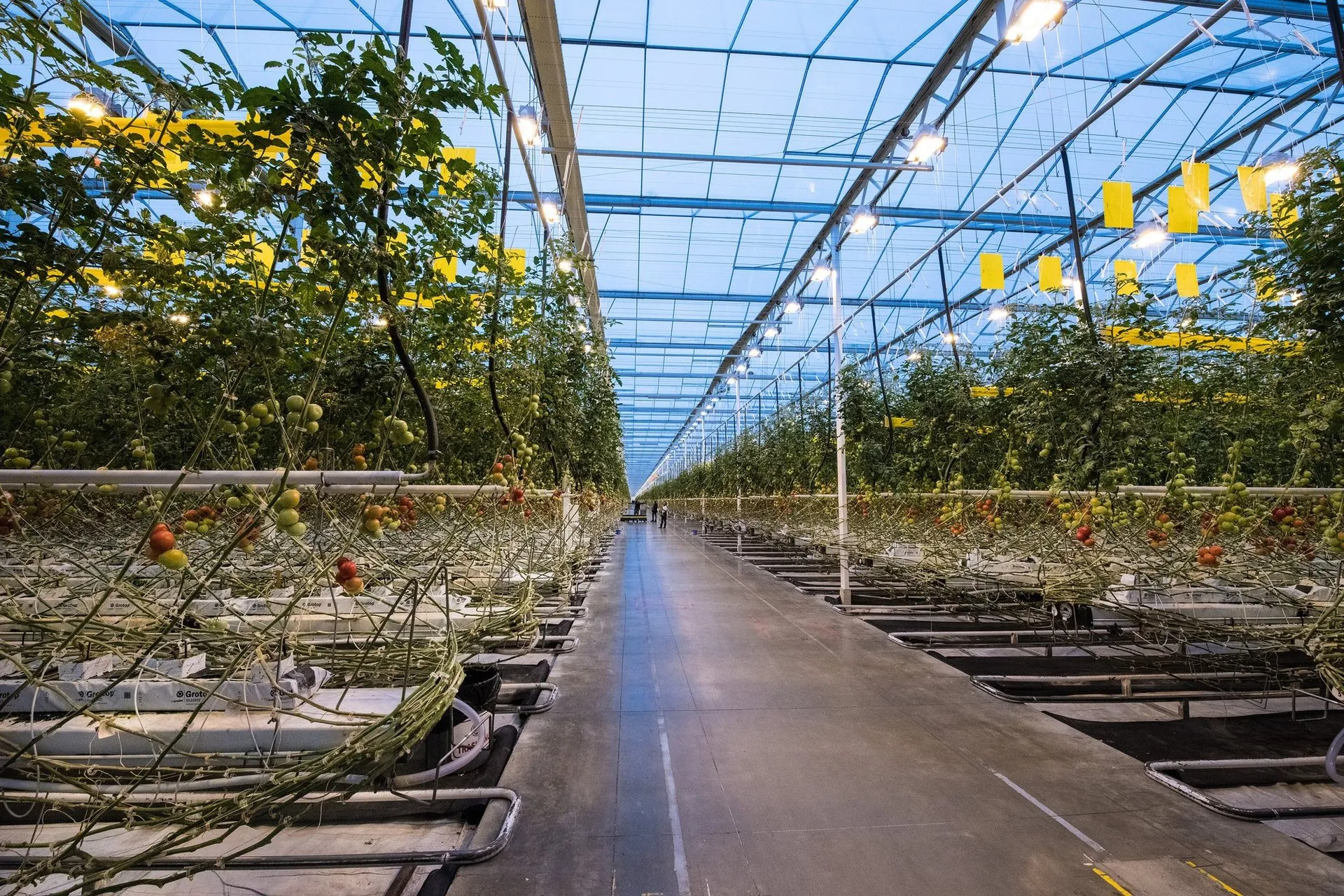
Lit tomatoes and other winter crops produce through the dark months. For pollination, winter brings its own conditions: short days, artificial light, cold outside and big differences between day and night. Bumblebees can work in these conditions, but they need some attention.
Short days and artificial light
In winter, much of the light in the greenhouse comes from lamps. With short natural days, flight activity is concentrated in fewer hours, and the lighting schedule largely decides when pollination can happen.
Flicker. Bees perceive fast changes in light better than people do. Light that flickers at a rate you do not notice may still be visible to bees. Ask your lighting supplier about flicker if the bees seem restless under the lamps.
How HPS and LED light affect bees and bumblebees is covered in our article on LED lighting and bumblebees.
Cold outside, warm inside
The greenhouse is heated, but the hive can still be in a cold spot. Near the walls, close to the floor or near open vents, it can be much colder than the greenhouse average, especially at night.
- Hive placement. Keep hives away from cold walls and draughts, and do not place them directly on a cold floor. A stand helps.
- Heating near the hive. A hive right next to a heating pipe can get too warm on one side. Look for a spot with an even temperature.
- Condensation. Cold nights and humid air can cause condensation in and around the hive. Good air movement around the hive helps.
Bumblebees at low temperatures
Bumblebees can warm up their flight muscles by shivering, which lets them fly at lower temperatures than honeybees. That is one reason why bumblebees are the usual choice in winter greenhouse crops. Still, a colony that spends a lot of energy keeping warm grows more slowly.
Honeybees are less suited for winter crops under glass. They fly less in low light and cool conditions, and in a greenhouse they tend to fly towards the light at the glass.
Pollen in winter
Low light and low temperatures can also affect the pollen. In winter, tomato flowers may produce less or poorer pollen, especially when the plant is under stress from low light. Good visits are then even more important to make the most of the pollen that is there.
Lighting schedule and activity
In winter, flight activity varies a lot from day to day. In the HiveWatcher portal you see activity per hive next to light and climate at the hive entrance. That shows how your lighting schedule and cold nights affect the bumblebees.
Read more about how to check tomato pollination and heat and humidity in the greenhouse, or see our page on tomatoes.
Read more about bumblebee hive monitoring with HiveWatcher.