
Blueberry and raspberry pollination in tunnels and greenhouses
How blueberries and raspberries are pollinated under cover, why bumblebees suit blueberry flowers, and what poor pollination does to the fruit.
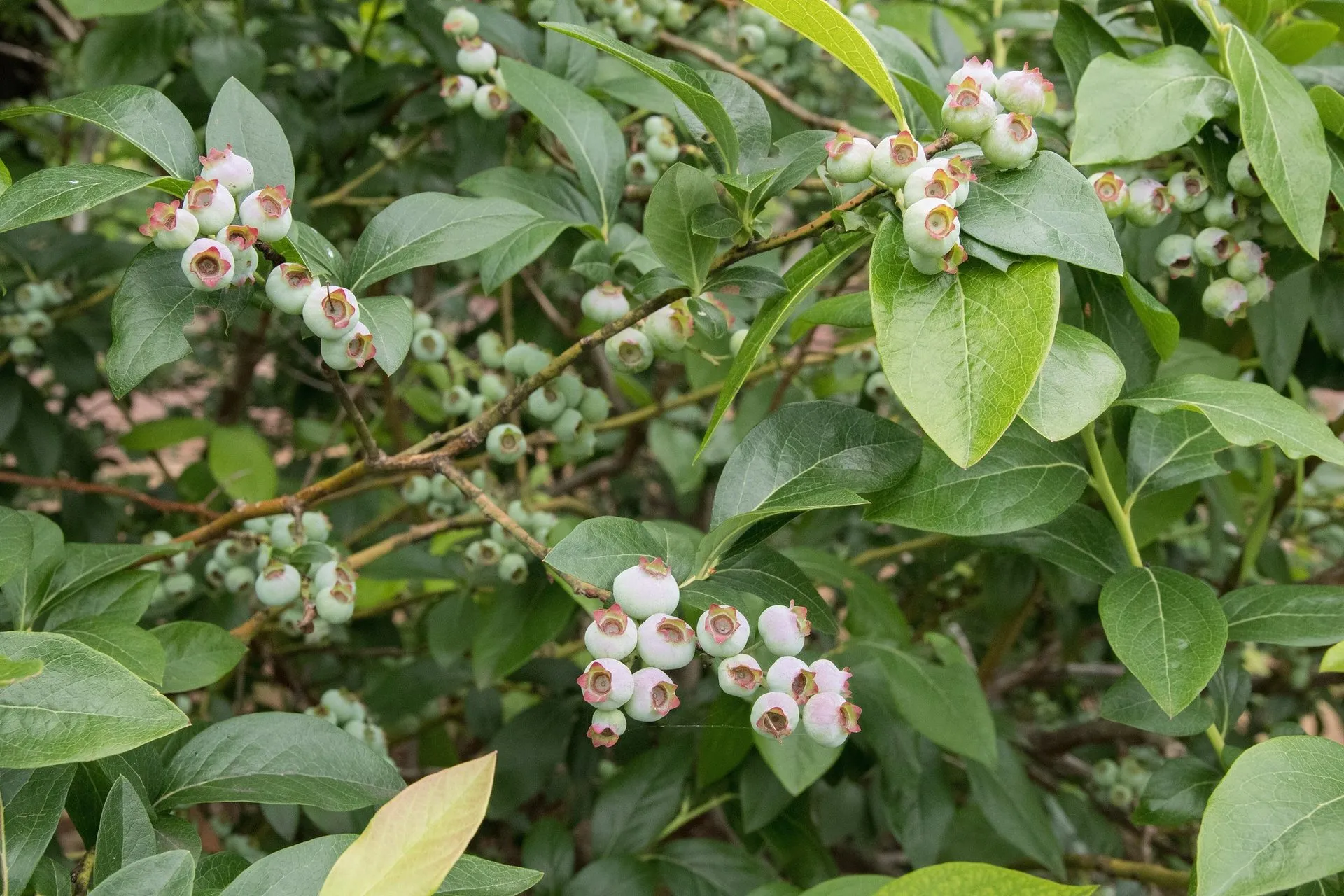
Blueberries and raspberries are more and more often grown in tunnels and greenhouses. Cover improves quality and extends the season, but it also keeps out wild pollinators. Pollination then depends on the colonies you bring in.
The blueberry flower
A blueberry flower is bell-shaped and hangs downward. The anthers sit inside the bell, around the style, and release pollen through small openings at their tips. The pollen does not fall out easily. It has to be shaken loose.
This is where bumblebees come in. A bumblebee holds on to the flower and vibrates its flight muscles without moving its wings. This is called buzz pollination or sonication. The vibration shakes pollen out of the anthers onto the bumblebee, and part of it ends up on the stigma of this or the next flower.
Honeybees cannot buzz pollinate. They do visit blueberry flowers and can pollinate them, but they generally release less pollen per visit. Honeybees sometimes also take nectar through slits at the base of the flower, made earlier by other insects, without touching the anthers. That is why many growers use bumblebees in blueberries, or combine them with honeybees.
Why blueberry pollination matters
Good pollination gives more berries per bush and, in general, larger berries, because berry size is linked to the number of seeds that develop. Many varieties also set fruit better with pollen from another variety. Ask your plant supplier whether cross-pollination matters for your varieties and how to arrange them in the tunnel.
The raspberry flower
A raspberry flower has many separate pistils on a central receptacle. Each pistil can grow into one small drupelet, and together the drupelets form the fruit. Every pistil needs its own pollen.
When pollination is incomplete, some drupelets do not develop. The result is crumbly fruit that falls apart when picked, or misshapen berries. These are hard to sell, even when the plants are healthy.
Raspberry flowers produce nectar and are attractive to both honeybees and bumblebees. The challenge is to get enough visits to every flower throughout the flowering period.
Points to watch under cover
- Light and covering material. Some films and screens change the light that bees use to orient themselves. Watch flight activity after a change in covering.
- Heat in the tunnel. Tunnels can heat up quickly. Bumblebees fly less in the heat, so keep hives in the shade and ventilate.
- Competing flowers. Flowering weeds or other crops nearby can draw bees away from your crop, especially honeybees.
- Spread of hives. In long tunnels, pollination can be uneven. Spread the hives so that every section gets visits.
- Flowering period. Have colonies in place at the start of flowering and replace them in time when activity declines.
Counting flower visits
With blueberry you can hardly check pollination by eye, and with raspberry you only see the result at harvest. The BeeNode camera in the crop counts flower visits, so you see per section whether the flowers get enough visits while they are still open.
Read more about strawberry pollination and how many hives per hectare you need, or see our page on soft fruit.
Photo: Σ64, Wikimedia Commons, CC BY 3.0
Read more about greenhouse pollination monitoring with HiveWatcher.