
Pollination under LED lighting: what changes for bees and bumblebees
How LED lighting in the greenhouse can affect bee and bumblebee flight, and what to watch for to keep pollination on track under the lamps.
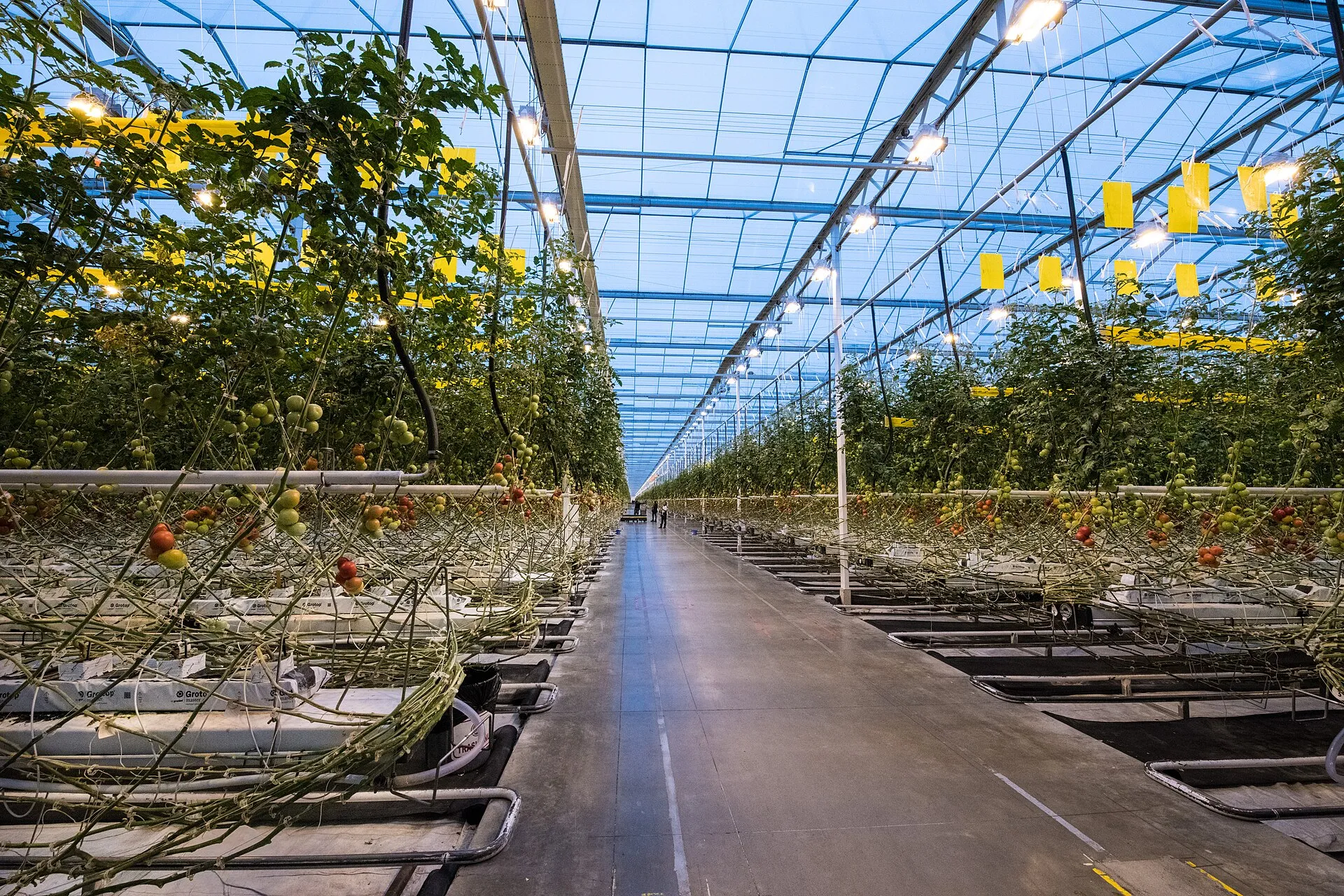
More and more greenhouses grow under LED lighting. For the crop that brings clear advantages. For pollinators it changes the environment they work in. Bee or bumblebee colonies rely on light to orient themselves, find flowers and decide when to fly. Change the light, and you can change their behaviour.
How bees and bumblebees see
Bees and bumblebees do not see light the way we do. They are sensitive to ultraviolet light and less sensitive to red. They use UV and the position of the sun to orient themselves, and flowers often have patterns that are visible in UV.
Many LED fixtures for horticulture put most of their output in red and blue, with little or no UV. Greenhouse glass and screens can also reduce the amount of UV that reaches the crop. What looks bright to a grower may look quite different to a bumblebee.
What can happen under LED
Growers who switch to LED, or add LED to existing lighting, sometimes notice changes in how their bees or bumblebees behave. Things to watch for:
- Flight times shift. With long lighting periods, bumblebees may fly outside natural daylight hours. That can be useful, but it can also tire a colony.
- Orientation problems. With little UV and a very different spectrum, some bees may have trouble finding their way back to the hive or may cluster against the glass or near the lamps.
- Uneven activity. Sections with different lighting can show different flight activity, even with the same hives.
- Climate differences. LED gives off less radiant heat towards the crop than traditional high-pressure sodium lamps. That changes temperature and humidity around the plants and the hives, which also affects flight.
How much of this you see depends on the fixtures, the spectrum, the lighting strategy, the crop and the colonies. There is no single rule that applies everywhere.
Practical points
- Talk to your supplier about hives and lighting. Hive suppliers often have advice for lit crops.
- Check hive placement. Avoid putting hives where they are directly lit at close range or where they warm up.
- Look at the transition. Changes in lighting, such as lamps switching on or off, or screens closing, are moments when behaviour can change. Watch the hives then.
- Compare sections. If one lit section has fewer bite marks or less traffic, lighting is one of the things to look at.
- Mind the dark period. Bees need rest too. Your supplier can advise on how lighting schedules affect colonies.
How measuring helps
Under LED, it is hard to judge by eye whether bees are working normally, especially outside working hours. HiveWatcher is built to work under full LED lighting. The HiveNode at the hive counts flights and records light and climate at the entrance, so you can see how activity follows your lighting and climate settings. The BeeNode in the crop records actual landings on flowers. That lets you compare sections and lighting strategies on what the bees actually do.
BeeSensing is currently running pilots with growers. Get in touch if you would like to take part.
Read more about pollination in tomatoes.
Read more about greenhouse pollination monitoring with HiveWatcher.