
Asian hornets and wasps at bee or bumblebee colonies
How to recognise the Asian hornet, what it does at bee or bumblebee colonies, how to protect hives from hornets and wasps, and where to report.
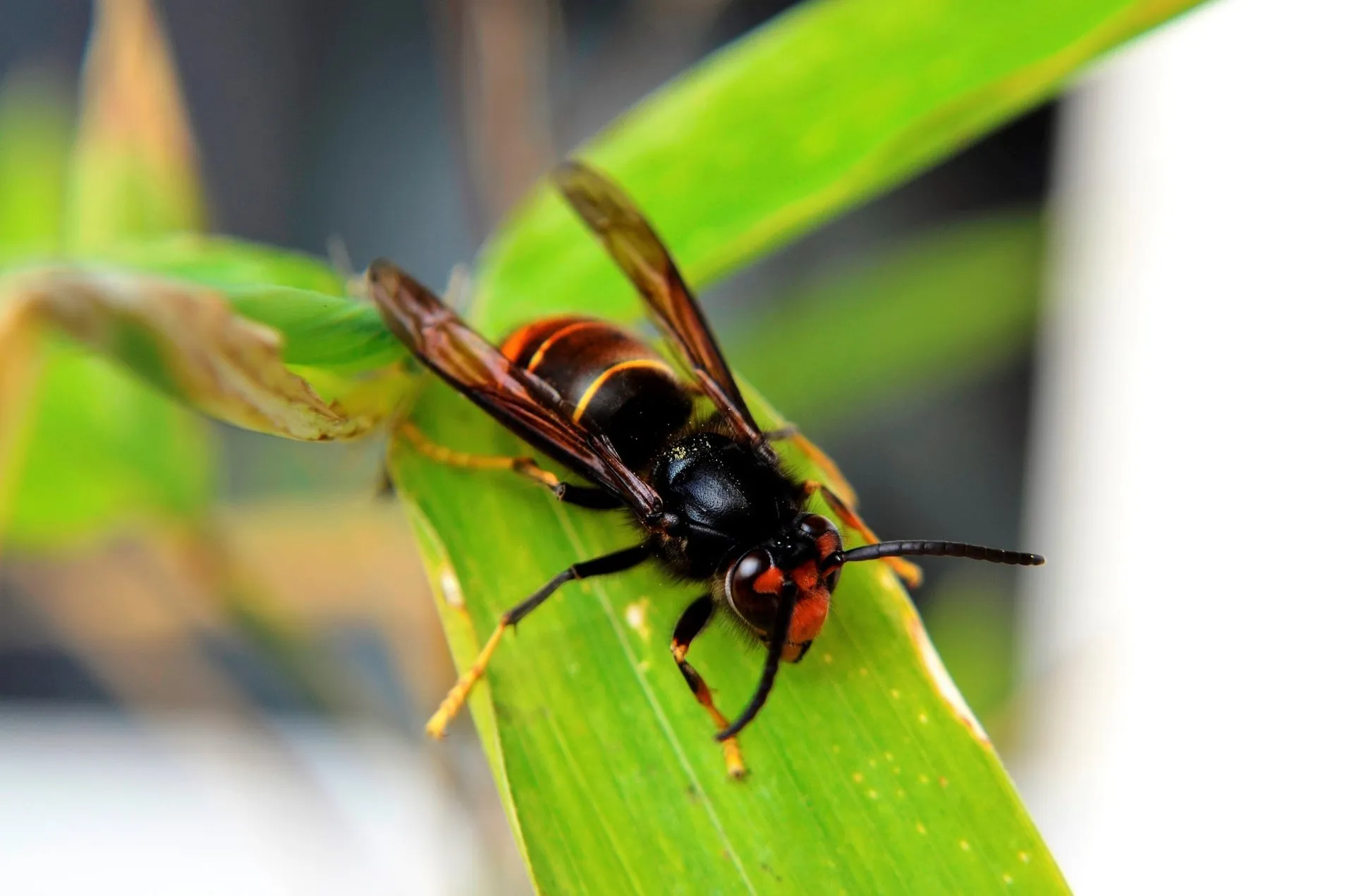
In late summer and autumn, hives in and around the greenhouse or tunnel can attract unwanted visitors. Wasps look for sugar and protein, and in more and more regions the Asian hornet (Vespa velutina) hunts at hive entrances. Both can weaken colonies at a time when you still need pollination.
Recognising the Asian hornet
The Asian hornet is an invasive species that has spread across large parts of Western Europe. It is easy to confuse with the native European hornet (Vespa crabro). Points to look at:
- Colour. The Asian hornet is mostly dark, with a dark thorax and one clear orange-yellow band near the end of the abdomen. The European hornet has a largely yellow abdomen with dark markings.
- Legs. The legs of the Asian hornet are yellow at the ends. The European hornet has darker, brownish legs.
- Size. The Asian hornet is somewhat smaller than the European hornet.
- Behaviour. Asian hornets hover in front of a hive entrance and catch returning foragers in flight.
If you are not sure, take a photo. It makes it much easier for the reporting point to confirm the sighting.
What hornets do to colonies
Honeybee colonies are the main target, but Asian hornets also catch other insects, including bumblebees. By hovering at the entrance, hornets catch foragers and frighten the rest. Colonies then reduce their flight activity. Over time this weakens the colony, because less food comes in. For a pollinating colony, the direct effect is that fewer bees go out to the crop.
Report, do not destroy
In many countries the authorities ask growers and beekeepers to report the Asian hornet. Report sightings and nests to your national reporting point, or to your local authority, as instructed in your country. Trained specialists then decide how to deal with a nest.
Do not try to remove a nest yourself. Asian hornets defend their nest fiercely, nests are often high in trees or hidden in hedges and sheds, and an improper attempt can scatter the hornets without destroying the nest. Leave it to trained people.
Protecting hives
- Entrance reducers. A smaller entrance is easier for the colony to defend and harder for hornets and wasps to get through.
- Hornet guards. Mesh guards in front of the entrance can keep hornets at a distance while bees pass through. Check that they do not hinder your own bees.
- Hive placement. Hives inside the greenhouse are less exposed than hives outside. Check whether open vents near the hives let hornets in.
- Keep watch. Look at the entrances regularly in late summer and autumn, when hornet pressure is usually highest.
Wasps and robbing
Common wasps also visit hives, especially in late summer. They look for sugar and may try to rob weak colonies. Bumblebee hives with a sugar solution inside can attract them too.
- Keep colonies strong. Strong colonies defend their entrance better.
- Avoid spills. Do not leave sugar water, damaged hives or old combs lying around.
- Reduce the entrance when you see wasps trying to get in.
Spotting a hive under pressure
Pressure from hornets often shows as a gradual drop in flight activity that is easy to miss. Because the HiveNode counts flights at every hive, the portal shows when one hive becomes less active than the rest. You get an alert, so you can check that hive in time.
We are also teaching the BeeNode, the camera node in the crop, to recognise wasps and hornets, including the Asian hornet, next to bees and bumblebees. Then the portal will show when hornets are hunting in your crop.
Read more about checking whether a bumblebee hive is active and bees for pollination, or take part in one of our pilots.
Read more about hive monitoring with HiveWatcher.