Activity per colony
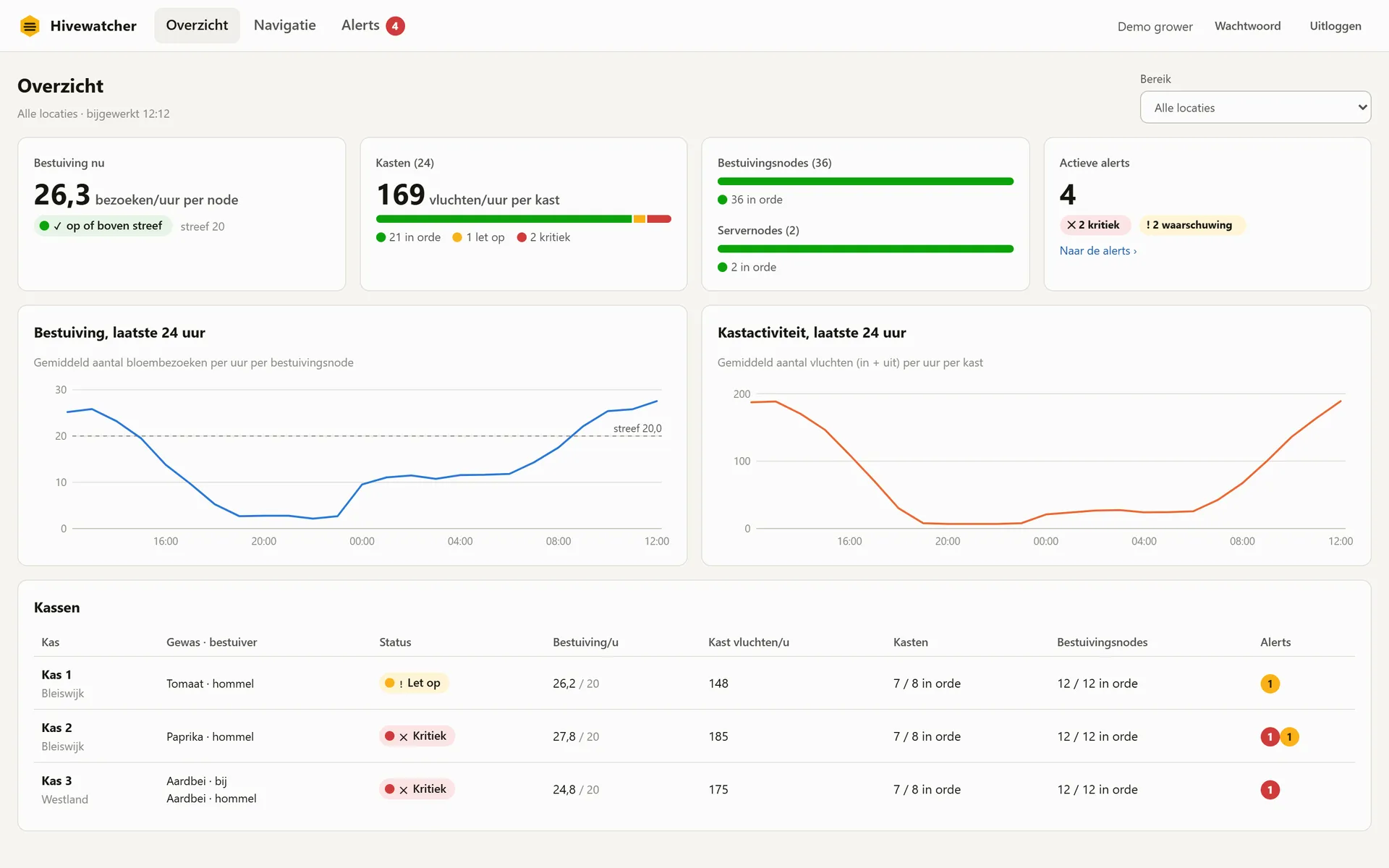
The HiveNode counts flights in and out of every bumblebee hive and listens to the colony, so you know when to replace a hive.

Sweet pepper
Sweet pepper sets fruit on its own, but bumblebee visits give heavier, better-shaped fruit. HiveWatcher shows whether your bumblebees are active and which sections they reach.
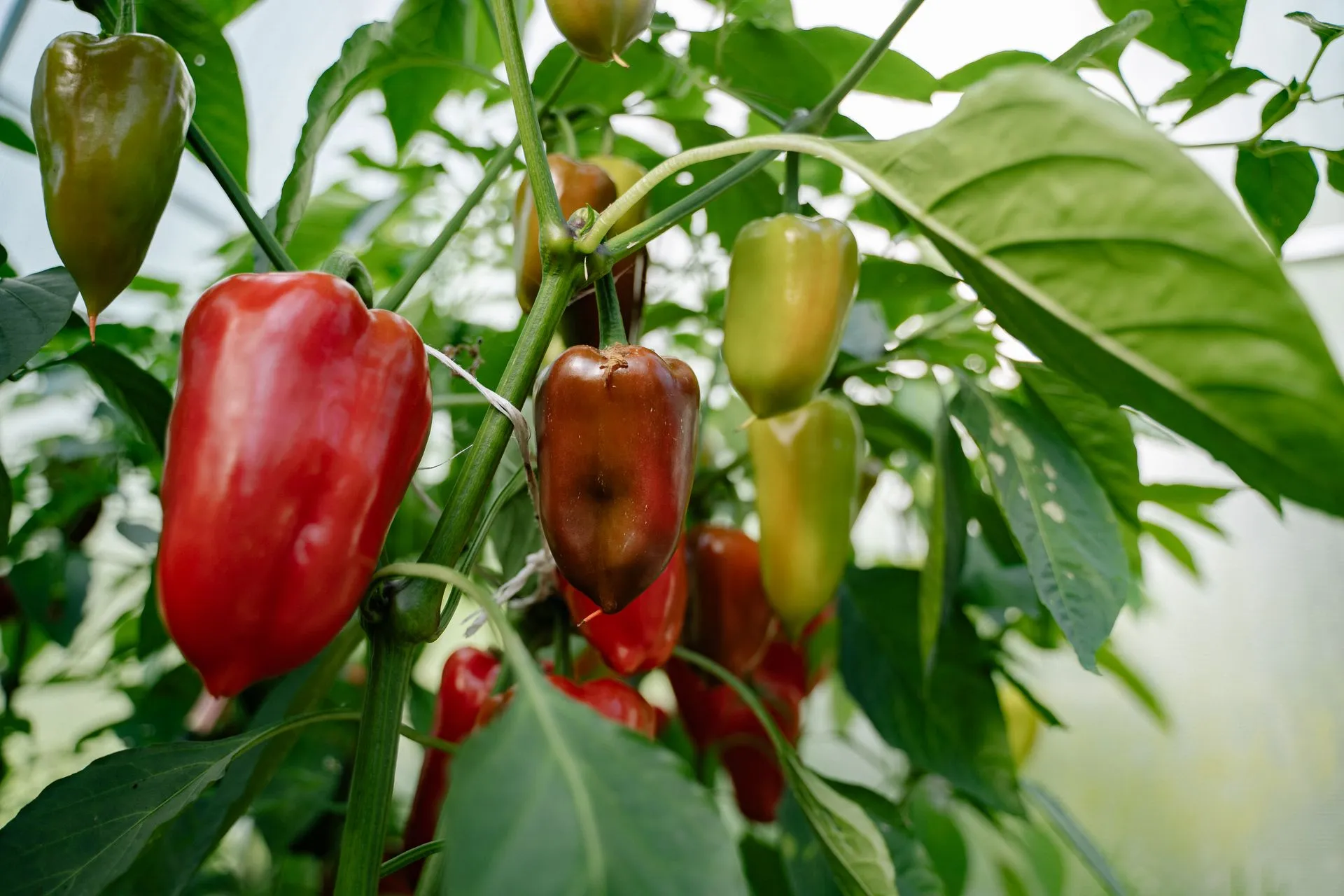
Sweet pepper flowers can pollinate themselves, yet growers bring in bumblebees for a good reason: flowers that are visited set fruit more reliably and tend to give heavier, better-shaped peppers with more seed. That matters most when the plants carry a heavy load or when light is low.
The flowers hang downwards and offer little nectar, so bumblebees do not always stay in the crop. Climate, light and the age of the colony decide how active they are. In winter, under LED lighting, that can change from week to week. More in pollination under LED lighting.
Aubergine, melon and courgette are also pollinated by bees or bumblebees in the greenhouse. HiveWatcher works the same way there. See fruiting vegetables.
Sensors at the hive and in the crop, with the results per section in the HiveWatcher portal.
The HiveNode counts flights in and out of every bumblebee hive and listens to the colony, so you know when to replace a hive.
The BeeNode watches the flowers in the row and counts real visits, so you see which sections fall behind.
Temperature, humidity and light at the hive entrance, including the effect of LED lighting and screens.
Activity and visits over weeks, next to climate, to discuss with your crop adviser.
Together we pick a section that represents your greenhouse, for example one near the gable and one in the middle.
HiveNodes on about four bumblebee hives, two to three BeeNodes in the crop and one central receiver with power and wifi or a network cable. We set everything up on site with the app.
In HiveWatcher you see flights per hive and flower visits per BeeNode, with an email alert when activity drops.
We compare the measurements with your own observations: fruit set, fruit shape and when you replaced hives.
After six to eight weeks and at the end we look at the results together and decide whether more sections are worth measuring.
Does it work under LED lighting?
Yes. The sensors work under full LED lighting and measure the light at the hive entrance, so you can see its effect on flight.
Do I need hives from a specific supplier?
No. The HiveNode works with bee and bumblebee hives from any supplier.
Do images leave the greenhouse?
No. The BeeNode processes its images itself and only sends counts.
The first pilots start in December. Tell us about your greenhouse and we will see together what a pilot looks like for you.